Bath mat: 3 surprising transformations – the truth behind their stunning upgrade from a necessity to a stylish design item.

I. From Functional Tool to Lifestyle: The First Transformation of the Bath Mat ‘s “Identity”
In the long-standing perception of household consumption, bath mat have been considered the most ordinary item in the bathroom. Their function seemed very clear: simply to prevent slipping and keep the floor dry. This overly utilitarian impression led to them being categorized as low-attention products for a long time. People bought bath mat as casually as disposable items, simply picking one and laying it down to complete the task. However, with the rise of home culture, consumers’ focus on “lifestyle” and “spatial experience” has surged unprecedentedly .
The first real transformation came from an upgrade in functionality. Past bath mat simply needed to absorb water, but today’s bath mat must be quick-drying, comfortable underfoot, slip-resistant, antibacterial, odorless, easy to clean, and durable. They even need to meet additional requirements such as compatibility with underfloor heating, quick-drying ventilation, and pet-friendliness. This evolution in functionality has transformed the bath mat from a simple fabric into a crucial item that embodies greater family safety and comfort.
This shift is actually an outward manifestation of increased family safety awareness. People are beginning to understand that the bathroom is one of the highest-risk areas for slips and falls in the home, especially for families with elderly members, pregnant women, and children. For these families, the need for slip resistance even surpasses the need for water absorption. The bathroom is no longer simply a “cloth to be laid on the floor,” but is gradually becoming an important member of the bathroom safety system.
At the same time, the feel of bath mat has been elevated to a higher evaluation dimension. Consumers are more sensitive to details such as the smoothness of the rebound when stepped on, the skin-friendliness of the material, the warmth of the sole, and whether it feels cold to the touch in winter. Its value is no longer just functionality, but a home experience closely linked to physical sensation. As a result, the market has seen the emergence of new materials emphasizing softness and rebound, memory foam structure, suede-like feel, and flexible silicone support, all of which have collectively driven this “first upgrade in identity.”
From another perspective, this upgrade is also a result of the awakening of family aesthetic awareness. Current home aesthetics trend includes various styles such as minimalism, creamy white, wabi-sabi, French style, and naturalism. Consumers are no longer satisfied with just functionality; they want every detail to be aesthetically pleasing. Under this trend, the bath mat has transformed from a marginalized item into a home furnishing piece that needs to be “matched,” becoming an important complement to the overall bathroom style. It is this pursuit of aesthetic details that has allowed the bath mat to break free from its rigid “necessity” status for the first time, beginning to move closer to a symbol of a higher level of lifestyle.
II. From Visual Background to Aesthetic Focus: The Second Shift in the “Presence” of bath mat
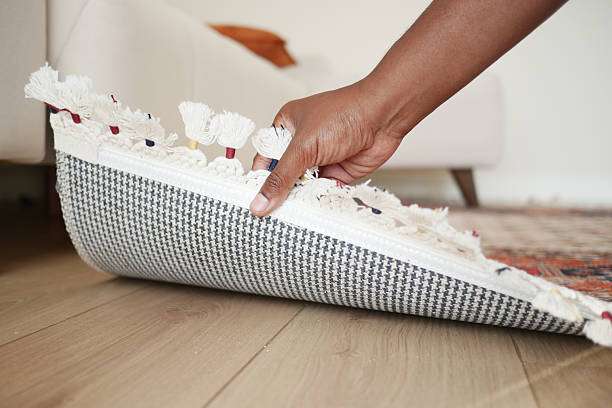
If the first transformation was an upgrade in functionality and experience, then the second transformation was a huge impetus brought about by aesthetic awareness. bath mat began to move from being background elements to the forefront in home spaces, becoming important visual focal points capable of changing the atmosphere of a space. This change is worth understanding in depth because it reflects a structural adjustment in modern consumer aesthetics.
In the past, the visual focus of a bathroom might have been the mirror cabinet, the washbasin, or the lighting ambiance. These elements are no longer just considered functional products, but are also imbued with visual value. Color choices, texture designs, shape contours, and material sheen all become important factors in shaping the bathroom’s atmosphere. For example, light beige, creamy coffee colors paired with wood grain can create a warm and relaxing atmosphere; dark gray paired with a metallic style creates a cool, industrial feel; and bright white echoes marble tiles, appearing clean and clear.
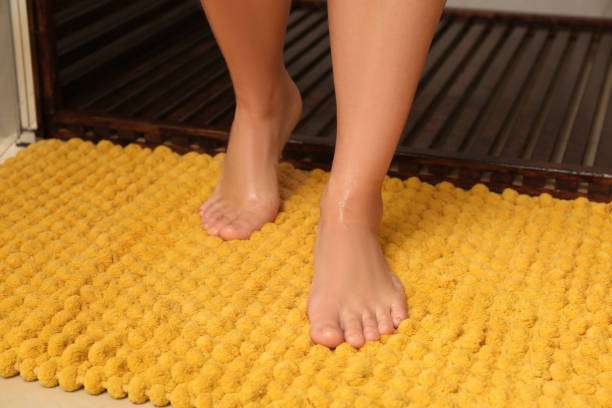
a bath mat can become a visual focal point is because bathrooms are inherently “low-density spaces.” Bathrooms typically have fewer main furnishings; they lack the abundant furniture of a living room or the plentiful textiles of a bedroom. Therefore, each item is more likely to occupy visual weight. Their location is usually in the first line of sight upon entering the bathroom, making them easily noticeable and fixed in position, readily attracting attention. When a bath mat boasts more vibrant colors, geometric textures, and a softer material sheen, it naturally assumes a visual guiding function, making the bathroom appear more harmonious and design-oriented.
This shift has also driven a significant upgrade in the industry’s design. More and more brands are engaging designers in bath mat texture design, incorporating geometric lines, abstract textures, natural patterns, and three-dimensional structures. This not only makes them more like design products but also makes consumers willing to pay extra for aesthetics, style, and consistency. From “just a piece of cloth to lay on the floor” to “a design item that enhances the quality of a space,” bath mat are evolving far faster than public perception has evolved.
More importantly, it is gradually beginning to influence the “spatial psychology” of the bathroom. Warm colors can alleviate the oppressive feeling brought by the coldness of tiles; soft lines can make a small bathroom look softer and cleaner; bright but not overly ostentatious colors can make the space more transparent and enhance the flow of light. These changes have become important roles in the aesthetic scene of the home, which also means that consumers are not just buying a bathroom mat , but a way of expressing their own style.
III. From Low-Priced Consumables to Quality Investments: The Third Shift in the “Sense of Value” of bath mat
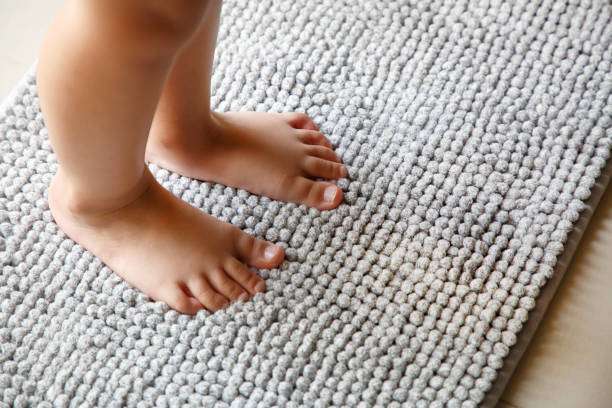
The third shift stems from an upgraded perception of consumer value. In the past, bath mat were inexpensive and had a short lifespan, leading people to believe they were easily replaceable consumables, thus requiring little thought in selection. However, the current bath mat market is showing a polarization: basic models continue to maintain low prices, while high-quality, designer, and technologically advanced models are experiencing a significant upward trend, with prices extending from tens of yuan to hundreds or even higher. Consumers are willing to pay a premium for safer anti-slip designs, a more comfortable feel, faster water absorption, longer-lasting rebound performance, and a more sophisticated visual appeal.
This reflects a growing awareness of “quality of life.” Consumers are willing to pay for health, safety, comfort, and aesthetics, and bath mat are precisely where these factors converge. For families, a high-quality bath mat not only reduces the risk of slipping but also provides a more stable and comfortable experience during daily use—a value that accumulates over time.
Advances in materials technology have also amplified the perceived value of bath mat . Memory foam retains its support even after prolonged use; silicone provides slip resistance to a level that ensures complete stability underfoot; and natural fibers offer antibacterial and breathable properties that better meet the health needs of modern families. Each material evolution corresponds to an improvement in the actual user experience, and consumers are willing to pay a higher price for these improvements.
Furthermore, design value has been redefined. The involvement of designer brands has transformed bath mat from ordinary household items into aesthetic pieces that express personal taste. With the increasing popularity of home decor sharing on social media, bath mat have become a common element in photographic composition. A beautifully designed bath mat can even make a bathroom look cleaner and more upscale, and this visual effect is precisely why consumers are willing to pay for it.
The end result is a complete shift in purchasing logic. From “just buy one” to “choosing quality, thickness, material, color, style, and rebound speed,” bath mat have been incorporated into the more deliberate selection process for household consumption. This change in value perception is a key indicator that bath mat have truly moved from being “necessities” to “aesthetic items.”
Conclusion
From function to experience, from aesthetics to value, the changes in bath mat may seem subtle, but they reflect the modern family’s profound pursuit of quality of life. It’s no longer just a cloth laid on the floor, but a guarantee of safety, an enhancement of experience, an expression of style, and the finishing touch to a space. The reason bath mat can achieve this series of remarkable upgrades is that modern consumers’ demands for home furnishings no longer stop at “good enough,” but rather pursue “better,” “more beautiful,” “more comfortable,” and “more reassuring.” This change is not an independent evolution of bath mat , but a natural extension of the overall upgrade of modern lifestyles.