Bath mats are no longer just for bathrooms? 3 trends reveal the explosive growth of portable bath mats in camping

From bathroom corners to outdoor campsites, the identity of a mat is being redefined.
If someone had said a few years ago that ” bath mats will become part of camping gear,” most people’s first reaction would likely have been confusion or even disbelief. Bath mats , in the public’s perception, have always been typical indoor items with a clear function, limited application, and extremely low profile. They’re laid on bathroom floors to solve the problem of slipperiness, and few people would seriously consider what else they could do.
However, in recent years, an interesting and real change has been taking place. More and more camping enthusiasts are adding “portable bath mats ” to their gear lists, using them not only at tent entrances and campsite handwashing areas, but also in changing areas, cooking areas, and even children’s play areas. This is not simply a “replacement,” but rather an expansion of the understanding of the function and usage logic of the bath mat category.
bath mats have moved beyond the bathroom and into camping scenarios is no accident. They weren’t forcibly dragged into the outdoor world, but rather a natural fit for a series of new needs as the camping lifestyle evolved. Three clear trends illustrate why portable bath mats have rapidly gained popularity in the camping community.
Trend 1: Camping is shifting from a “survival experience” to a “lifestyle experience,” with ground comfort being re-emphasized.
Early camping culture was centered on overcoming challenges, tackling difficulties, and simplifying the experience. Hard, wet, and dirty ground were all part of camping. In this narrative, camping was an experience detached from daily life, and comfort was not a primary consideration.
However, as camping has gradually evolved from a niche activity for a few enthusiasts to a family leisure activity, parent-child trip, and weekend lifestyle, the expectation of comfort has undergone a fundamental change. More and more people are not camping to “endure hardship,” but rather hoping to replicate or even upgrade the comfort experience of daily life in a natural environment.
It is in this transformation that ground issues have been brought back to the forefront. Campground surfaces are often less than ideal; dirt, gravel, and grass become damp after rain or in the early morning. People need a ground solution that can quickly insulate against moisture, provide tactile feedback underfoot, and doesn’t take up too much space.
Traditional outdoor mats are often large and cover a wide area, making them more suitable for sitting or lying down than for scenarios involving frequent movement or short periods of standing. In contrast, portable mats fill this gap perfectly. They are of moderate size, have strong anti-slip properties, and provide a clear feel underfoot, making them suitable for use at tent entrances or temporary functional areas.
As camping begins to pursue “life as natural as nature,” bath mats , originally designed for indoor living, have naturally found a new purpose.

Trend 2: Camping scenarios are becoming more segmented, and temporary functional areas are creating new demands.
Modern camping is no longer simply about “sleeping and eating,” but is divided into several clearly defined small areas. Tents, changing areas, washing areas, cooking areas, and children’s play areas each serve different purposes. This change in spatial structure has directly spurred the demand for “small and flexible” ground-based products.
In these temporary functional areas, people often need to frequently enter and exit, and stay briefly, and their feet are not in a stable condition. Having just washed their hands by the river, taken off their shoes and changed clothes, or stepped on wet ground after rain, these situations can all make safety and comfort underfoot a problem.
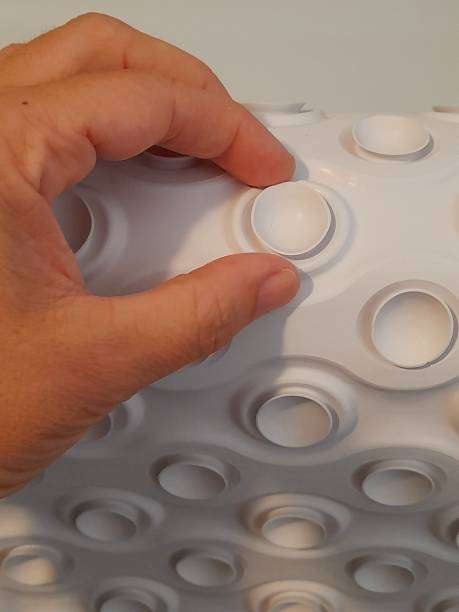
Portability demonstrates its exceptional adaptability. Its non-slip structure provides stable support on wet grass or mud, while its perforated or drainage design prevents water accumulation. The flexible material is neither uncomfortable to walk on nor requires complicated installation. More importantly, it can be moved freely and its position quickly adjusted as needed.
This flexibility allows bath mats to serve as “temporary ground infrastructure” in camping. Unlike large ground mats that are laid out and fixed in place, they can be constantly adjusted to adapt to the pace of camping activities. It is precisely this characteristic of being able to “intervene at any time and evacuate at any time” that gives bath mats new value in camping scenarios.
Trend 3: Changes in the camping population, with safety and convenience becoming prominent demands.
The changing camping demographic is the third key factor behind the surge in portable bath mats . With the increasing trend of family-oriented and parent-child camping, participants are no longer limited to physically fit and experienced adults, but also include children, the elderly, and those not fully adapted to the outdoor environment.
In this setup, the importance of ground safety is significantly amplified. Slippery, uneven ground might simply be “uncomfortable” for adults, but it could pose a substantial risk to children and the elderly. The camping environment is inherently unpredictable, and families will instinctively want to minimize risks within a controllable framework.
The portable bath mat serves more than just a comfort tool; it acts as a safety cushion. It can be placed at tent exits to prevent stepping into wet mud; it can be placed in handwashing areas to reduce the chance of slipping; and it can also serve as a small area for children to play barefoot, insulating them from cold or rough ground.
This usage requires no additional learning curve. The logic behind using a bath mat is already well understood in home life. When campers begin to bring their “home habits” outdoors, a familiar and reliable item like a bath mat will naturally be their first choice.
bath mat, and not other mats, that gets brought into the camping site?
On the surface, there are many types of mats available for camping, so why is it that bath mats are being used in this “cross-border” application? The answer is not complicated; it stems from a set of mature characteristics that bath mats have developed through long-term indoor use.
First, bath mats naturally possess waterproof, non-slip, and quick-drying properties, which are precisely the most common issues in camping environments. Second, bath mats are typically lightweight, rollable, and foldable, adding minimal burden. Third, bath mats are designed with a “range of motion when standing” in mind, rather than lying down, which aligns perfectly with the temporary functional areas used in camping.
The deeper reason lies in the fact that it has already validated its role as “safe and convenient” in family life. People know what problems it can solve and how to use it. This low cognitive cost is an important prerequisite for its rapid adaptation to camping scenarios.

portable bath mats is changing the boundaries of camping gear.
As bath mats enter the camping gear system, a noteworthy change is taking place: the boundaries of camping equipment are becoming blurred. More and more items that were originally classified as “household items” are being redefined as “outdoor usable.”
This isn’t a decline in the sophistication of equipment, but rather an inevitable result of the maturing camping lifestyle. When people no longer view camping as a confrontation with nature, but rather as coexisting with it, they are more willing to adopt mature lifestyle solutions. Portable bath mats are a representative product of this trend of integration.
It is neither traditional professional outdoor equipment nor limited to the bathroom space, but rather finds a real area of demand in between.
Conclusion: Bath mats stepping out of the bathroom is a sign of the evolution of the camping lifestyle.
Bath mats are no longer just for bathrooms; this isn’t just a marketing slogan, but a reality that’s unfolding. The explosive growth of portable bath mats in camping reflects the shift in camping from a survival experience to a lifestyle experience, a result of more refined space utilization, and an inevitable choice driven by changes in population demographics.
When a once unremarkable bath mat begins to play a role in ensuring safety, comfort, and order at a campsite, it signifies a qualitative change in the very act of camping. People are no longer satisfied with simply “having a place to stay,” but are starting to seriously consider “how to stay better.”
Bath mat is simply the most visible piece of the puzzle in this transformation.
FAQ
Question 1: What is the biggest difference between a portable bath mat and a regular camping mat?
A portable bath mat is more suitable for areas where you stand for short periods of time and move around frequently, emphasizing anti-slip and drainage, while a camping mat is more suitable for sitting, lying down, and large-area laying.
Question 2: Are all bath mats suitable for camping?
Not necessarily. Camping-ready bath mats are typically lighter, easier to clean, have better drainage, and are more portable in size and weight.
Question 3: Is the popularity of portable
bath mats in camping a short-lived phenomenon? It’s unlikely. As long as camping continues to become more family-oriented and lifestyle-oriented, these small ground-based products that combine safety and convenience will remain a long-term trend.