4 powerful bath mat tips to instantly transform the visual focus of your bathroom.

In most people’s minds, a bath mat seems like an ordinary bathroom item, its main functions being to absorb water, prevent slipping, and provide a brief warm cushion underfoot. For a long time, people have simply regarded it as an essential item after bathing. However, with the continuous evolution of home aesthetics, the bath mat has quietly transformed its role, moving from a functional item to a decorative soft furnishing.
More and more families are discovering that a well-handled bath mat can not only enhance the visual order of a space but also strengthen its style expression, even creating a surprising “doubled atmosphere” in small spaces. Its ability to create a visual focal point is far stronger than most people imagine.
If used properly, it can become the starting button for the bathroom atmosphere, suddenly giving an ordinary corner a theme, direction, and visual hierarchy. This article will focus on four powerful techniques, delving into color, material, composition, size proportions, style enhancement, and layout strategies to analyze how a bath mat can reshape the visual focal point of the bathroom at a very low cost, achieving a truly “revolutionary effect.”
Tip 1: Use the dominant power of color to reset the visual center, making the bathroom mat the first thing you see in the bathroom.
Color is the most impactful tool among all methods of creating a visual focal point. Bathrooms tend to be spaces with restrained color palettes, commonly featuring white, gray, beige, and light wood tones. This makes bath mat the easiest soft furnishings to create a contrasting effect. If used properly, a bath mat can dominate the visual flow from the moment you enter the bathroom. For example, a bright, highly saturated orange mat placed on a cool white tile floor will immediately create a strong color temperature contrast, making the bathroom appear more energetic and vibrant.
Conversely, if you want to create a tranquil, balanced, and soft visual focal point, the bath mat can act as a coordinator for the overall tone. Using low-saturation colors such as misty blue, light gray, lotus root pink, or milk tea can create a gentle echo with the walls or shower curtain, making the bathroom space appear more calming, comfortable, and relaxing.
Color strategy is not just about achieving visual appeal, but also about using color blocks to guide attention. When the color of the bathroom mat is significantly more eye-catching than other objects, it naturally becomes the visual anchor. In this way, even in a limited bathroom, the viewer’s attention can be focused on the lower areas of the space, creating an upward-stretching effect that makes the bathroom appear more spacious and three-dimensional. Furthermore, color choices can also create different styles.
For example, a dark blue or dark green bathroom mat can quickly create a modern, understated luxury feel, while saturated yellow and coral have a strong Scandinavian vibe, and black and white geometric patterns highlight minimalism and a sense of order. Using color strategy for visual positioning is the easiest and most effective way to quickly and effectively change the focal point of a bathroom.
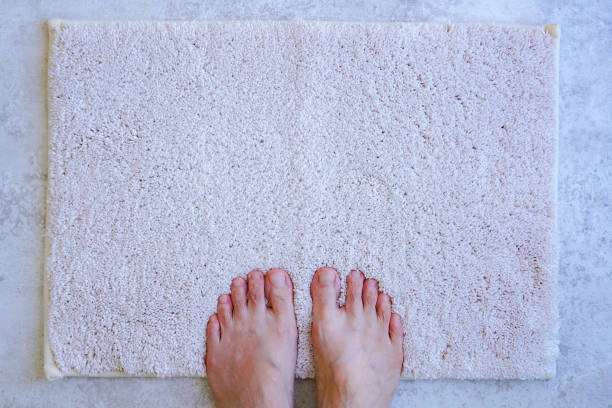
Technique 2: Use material contrast and tactile cues to emphasize the presence of the bath mat , making it an emotional trigger for the spatial atmosphere.
The visual impact of materials is an underestimated power; each mat material carries different ambiance implications. Soft, plush materials make a space feel warm and comfortable, while natural fibers like cotton and linen give the bathroom a natural, fresh, and relaxed feel. Silicone or rubber mats, on the other hand, tend to project a clean, functional, and safe visual image. Mats shape tactile expectations through material differences, and these expectations themselves have a visual cueing effect. Even without stepping on them, viewers can visually perceive their softness, texture, roughness, or firmness, and this perception subtly influences the overall atmosphere of the bathroom.
More importantly, the different materials create a natural contrast with the hard surfaces commonly found in bathrooms. The stark contrast between the cool sheen of tiles and the soft texture of the bath mat amplifies the mat ‘s presence, transforming it from a functional object into a key element that enhances the warmth of the space. Material contrast also creates visual pauses, drawing the eye to the mat upon entering the bathroom , making it the focal point. The stronger the contrast, the more obvious the visual focus.
For example, minimalist black silicone paired with light-colored tiles presents a clean, calm, and crisp aesthetic; while thick wool paired with marble-style tiles creates a stronger contrast between softness and hardness, resulting in a space with a stable yet warm aesthetic balance.
Furthermore, materials can also convey style. A vintage-style bathroom is suitable for cotton or linen fabrics with monogram textures, a more natural Scandinavian style is best suited to Morandi colors and wool blends, while a modern hotel style is better suited to smooth, water-resistant, and clean-lined silicone bath mat . Choosing the right material not only enhances the visual focus but also improves the overall style unity, preventing the bathroom from appearing cluttered and disorganized.
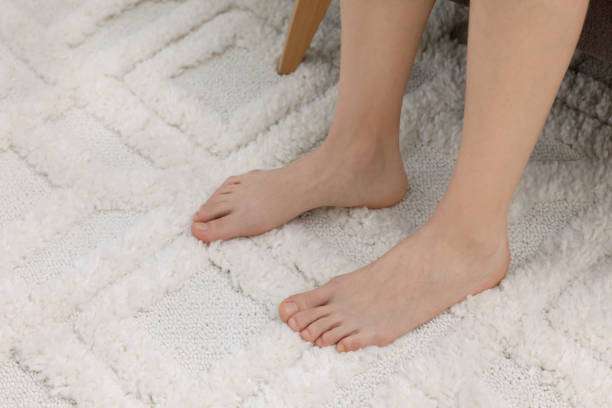
Technique 3: Use size proportions and spatial structure to create visual focus, making the bath mat automatically the “center stage” of the space.
The size and proportions of a bath mat directly influence how a visual focal point is formed. A mat that is too small is easily overlooked by other items in the bathroom, while a mat that is too large may disrupt the spatial balance.
Appropriate proportions are key to creating a visual focal point. If the bathroom is long and narrow, choosing a long, narrow mat can effectively enhance the sense of depth, allowing the viewer’s eye to follow along the mat , which naturally becomes a guiding line of sight. In a square bathroom, choosing a slightly larger but proportionally balanced rectangular mat allows the mat to become the central focal point, creating a sense of symmetry and stability in the space.
Furthermore, adjusting the distance between the mat and the core bathroom elements can further amplify the visual focal point. For example, placing the mat directly under the sink creates a vertical connection from the sink to the floor, clearly defining the functional areas and enhancing the sense of spatial organization. Similarly, placing the bath mat in the center in front of the shower curtain creates a “center stage” effect, making the mat the focal point. The combination of size and placement is crucial for creating a focal point composition; it not only affects spatial aesthetics but also the user’s spatial experience, making the bathroom more orderly and directional.
Size proportions also affect the psychological scale of a space. A larger mat can make a small bathroom appear larger because it visually “integrates” fragmented visual information from the floor, thus reducing the feeling of clutter. Conversely, if the bath mat is too small, the floor will appear fragmented and lack a visual center, making the space feel cramped. Proper proportions not only make the mat a focal point but also optimize the sense of spatial structure and enhance overall comfort.
Tip 4: Strengthen visual memory points through style positioning and pattern strategies, making the bathroom mat the theme of the bathroom.
a bath mat can determine the overall style and tone of a bathroom. Patterns create visual focal points, which are the core source of attention. Simple geometric patterns can quickly create a modern, orderly, and rational style, while also having a strong visual guiding effect, naturally drawing the observer’s eye to the center of the mat .
If the bathroom’s overall style is simple, a patterned bath mat will create a strong contrast, becoming the visual protagonist. Conversely, if the bathroom itself has a rich style, a mat with a subtle texture can be chosen , using details to reflect the style without overshadowing it.
Furthermore, patterns have a spatial adjustment ability. For example, horizontal textures can widen the visual width, making the bathroom appear larger; vertical stripes, on the other hand, make the space appear longer and deeper. Large-area patterns are suitable for medium to large bathrooms, while small patterns are more suitable for small bathrooms, keeping them refined without overwhelming the visual burden. Controlling the visual rhythm through patterns is a sophisticated approach to enhancing the focal point.
In terms of style, a bath mat can determine the theme of the entire bathroom. For example, a tropical theme can instantly transform a white bathroom into a resort style; Japanese patterns can give the bathroom a minimalist Zen feel; and an abstract style can make a modern space appear more artistic. The more defined the style, the more prominent the focus. The mat is no longer just a small item underfoot, but a voice that speaks to the style.
Conclusion
a bath mat lies in its combined effect on visual appeal, tactile feel, style, and proportion. Through four key techniques—color, material, proportion, and pattern— a bath mat can create a clear and defined visual focal point in the bathroom, transforming the space from bland and uninspired. When a bath mat becomes the visual centerpiece of a space, it transcends its functional function to become an aesthetically pleasing item. A small bath mat holds immense potential to change the atmosphere of a room. With the right strategies, it can be the key to a completely revitalized bathroom.