Bath mat: 5 key layout methods to create a significantly larger visual space in small bathrooms.

In everyday home design, the bathroom is often the most overlooked area, especially in small apartments. Bathroom space is compressed to a minimum, with tight layouts, limited storage, and a heavy visual impact; the placement of every item affects whether the space feels cramped. However, when discussing bathroom expansion, people often think of replacing tiles, demolishing walls for a complete renovation, or altering the wet area structure, rarely realizing the immense space-adjusting power of a simple bath mat .
A bath mat not only provides basic water absorption and slip resistance, but also offers visual guidance, structural zoning, proportional harmony, color contrast, and spatial extension effects. With proper layout, a bath mat can reorganize the visual space of a small bathroom, making the area more open, the layers clearer, and the boundaries softer, creating a sense of spaciousness far exceeding the actual area.
The visual expansion of a small bathroom doesn’t rely on increasing physical space, but rather on reshaping visual perception. By strategically placing mats , the originally complex and chaotic lines on the floor are integrated into more orderly surfaces, thus giving the space a sense of unity.
Simultaneously, by utilizing strategies of color, proportion, and shape, the eye is guided to a cleaner, more continuous, and deeper visual path. This article will delve into five key layout methods to explain how bathroom mats can help small bathrooms achieve a significant visual expansion effect, revealing the design logic behind them, making each bathroom mat a secret tool for enlarging space.
Method 1: Use a vertically extended layout to lengthen the visual line of sight, making a small bathroom appear deeper.
Small bathrooms often suffer from a lack of depth. Upon entering, one is often greeted only by a cramped space comprised of the sink, toilet, and shower area, creating a confined and cramped appearance. In this situation, the vertical arrangement of a bath mat can play a crucial role in visually stretching the space.
When the mat is laid vertically along the main axis of the bathroom, it creates a clear linear “path,” allowing the eye to naturally extend forward, thus generating the illusion of a deeper and longer space. Long, narrow bath mat , in particular, with their elongated proportions, shift the focus from the immediate area to the distance, making the bathroom appear “stretched out.”
This visual stretching effect is actually based on spatial psychology. Human vision naturally seeks out guiding lines in space. When a bathroom mat forms a linear structure in a single direction, the eye naturally follows its extension, and this movement creates a secondary amplification of spatial depth in the brain.
This effect is particularly pronounced in long, narrow bathrooms. For example, when a bathroom mat is placed directly under the sink and extends to the shower area entrance, the entire bathroom appears more cohesive and unified, no longer fragmented by different areas.
If the bath mat is a darker color and the surrounding tiles are lighter, this vertical stretching will be more pronounced because the contrast in color draws the eye to the mat itself, further emphasizing the sense of depth. In other words, a bath mat with the right orientation, size, and color can be the most effective and economical strategy for expanding the space of a small bathroom.
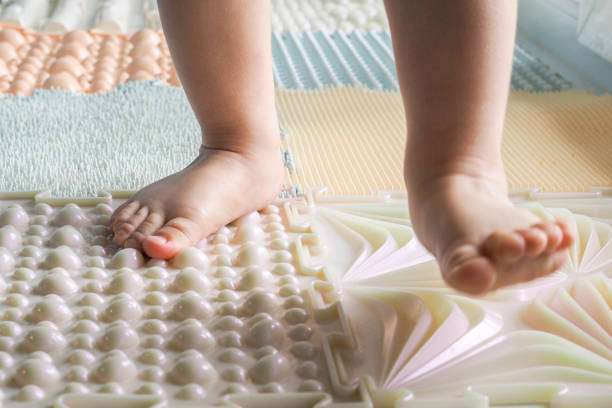
Method 2: Expand the width of the bathroom by using horizontal visual arrangement to make it appear less cramped.
Contrary to a lack of depth, another common problem in small bathrooms is the narrowness of the space, especially the gap between the sink and the toilet, which can feel so small that it makes one feel suffocated. In this case, the horizontal layout of a bath mat can effectively expand the visual width.
When the mat is spread out horizontally, creating a visual contrast with the narrowest part of the bathroom, it can give the impression that the floor is “wider,” making the bathroom look more spacious and balanced overall.
The core logic behind the horizontal expansion effect lies in the visual “horizontal extension.” When human vision enters a space, it naturally scans the floor. If it sees an object that extends horizontally, it will be used as an indicator of the floor’s width, and a bath mat can perfectly fulfill this role. Placing a wide bath mat or a horizontally patterned mat in a narrow bathroom can make the floor space appear more spacious, thereby eliminating the feeling of narrowness and oppression, and making the bathroom feel more relaxing overall.
if the bath mat has horizontal stripes or geometric patterns. The eye is automatically guided by the inherent direction of the pattern, thus expanding the visual area of the horizontal plane. Conversely, choosing a vertical stripe pattern may further emphasize the narrowness of the space, making the bathroom appear even more cramped.
Therefore, for small bathrooms that need to visually widen, choosing a horizontally laid-out mat is the most efficient approach. No construction or major renovations are required; simply placing the right mat can transform a “narrow” bathroom into a “wide” one.
Method 3: Create a visual center through centralized layout to make the bathroom structure clearer and reduce the feeling of clutter.
Many small bathrooms appear cramped not because of too many items, but because of too many visual focal points and a lack of organized lines. A bath mat can act as a “visual focus” in such cases, creating a clear center for the bathroom through a well-planned layout. This eliminates clutter and creates a sense of spaciousness and order. Once the bathroom has a clear visual center, surrounding elements no longer compete for attention, making the space appear more orderly and “spacious.”
The core strategy of centralized layout is to visually link the bath mat to the most important components of the bathroom. For example, placing the bath mat under the sink and in its central position ensures that the eye is immediately drawn to this area upon entering the bathroom, rather than scattered across multiple locations such as the toilet and shower base. In this way, visual information about the floor is concentrated, and the structure of the bathroom becomes clear and understandable.
Furthermore, a centralized layout can create the concept of a “regional center.” For example, placing a thick, slightly dark-colored bath mat in the center of the wash area is like adding a “core island” to the floor, making the space more layered. This distribution not only enhances the sense of stability in the space but also makes it easier for the eye to focus on a central point, thus creating a sense of visual expansion.
The more cluttered a small space is, the smaller it appears; conversely, the clearer the visual focus, the larger the space seems. This is why the placement of bath mat is especially crucial in small bathrooms.
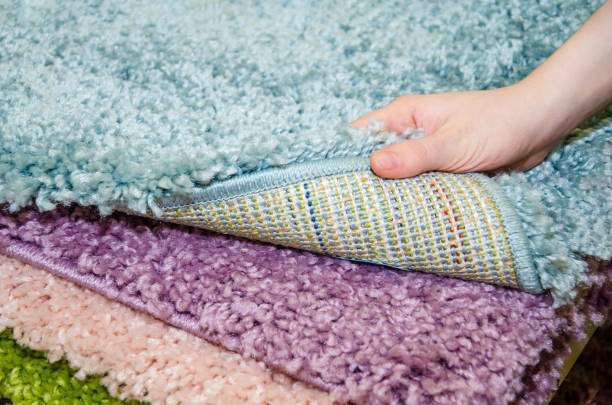
Method 4: Utilize a dual strategy of contrast enhancement and unified layout to improve visual order and amplify the visual expansion effect.
The most important prerequisite for visually expanding a space is that the space has a sense of order. bath mat can achieve this effect through two completely opposite but equally effective strategies: one is to use color contrast to strengthen the focal point, and the other is to use color unity to weaken the boundaries. Both can make small bathrooms appear larger, depending on the specific needs.
Color contrast is suitable for bathrooms with a light overall tone, simple materials, and a lack of focal points. In this case, placing a darker, more saturated mat can effectively emphasize the center of the floor, making the space appear more focused and visually oriented.
A dark mat stands out clearly and powerfully against a light background, creating a visual anchor point on the floor and giving the bathroom a strong sense of structure. When the sense of structure is enhanced, people perceive the space as more orderly, and order makes a small space appear larger.
Conversely, a unified color scheme is suitable for small bathrooms with too many spatial elements and chaotic colors. When a bathroom contains a large number of objects of different materials and tones, the visual burden increases, and the space appears smaller. In this case, choosing a bath mat in a color close to the tile , such as white, light gray, or beige, allows the bath mat to blend seamlessly with the floor, weakening the floor boundary and making the floor look more continuous and without breaks. This continuity blurs the boundaries of the space, thus creating a “visually larger” effect.
Whether you choose a contrasting or unified strategy, the core goal is to create a clear order in the bathroom, reduce visual clutter, and form a “clean visual plane.” When clutter is eliminated, the space naturally appears larger.
Method 5: Enhance the smoothness of movement by combining optimal locations, allowing both the eyes and body to simultaneously perceive a larger space.
Expanding the size of a bathroom is not just a visual issue, but also a matter of circulation. When people enter and exit the bathroom, if every step is smooth and unobstructed, and their bodies feel relaxed, they will naturally perceive the space as larger.
As one of the objects that the human body has the most contact with the floor, the location of the bath mat directly affects the smoothness of the bathroom’s circulation. For example, if the bath mat blocks the doorway or is placed at the transition between the shower area and the washbasin area, it will hinder movement and create a feeling of “crowdedness” and “discontinuity” for the user, which will reinforce the feeling of crampedness.
The correct layout should place the mats on either side of the flow of movement, rather than in the exact center. For example, place the mat in a stable position in front of the sink, so that people don’t step on it the first thing they do when entering the bathroom , but rather naturally step on it before preparing to wash up. This makes the flow of movement clear, and people won’t feel inconvenienced by stepping on the wrong mat or stepping over it .
In addition, it’s crucial to place the bath mat where the visual flow isn’t interrupted. If the mat is placed too close to the shower area, it creates a visual pause, making the space appear shorter. Adjusting it slightly back, allowing some “breathing space” on the floor, can make the entire bathroom appear deeper and longer.
By optimizing movement patterns through mat placement, the body feels more free, and the visual experience creates a more fluid space. When both visual and physical experiences are improved simultaneously, the sense of spaciousness is amplified exponentially.
Conclusion
Small bathrooms may have limited space, but their visual possibilities are limitless. bath mat, as one of the easiest, lowest-cost, and most instantly effective soft furnishings to modify, can expand the bathroom beyond its physical dimensions, provided the right layout strategies are followed.
Vertical extension makes the space feel deeper, horizontal arrangement makes it feel wider, concentrated layout makes the structure clearer, contrast and unity strategies enhance order, and optimized circulation makes the user experience more comfortable. By combining these five methods, the bath mat is no longer just a small item on the floor, but a true visual composer, a space expander, and a shaper of atmosphere and style.