Bath mats are the top choice for pet-friendly families: 4 types of materials that are truly scratch-resistant and won’t trap fur

I. Why do pet-owning families have completely different requirements for bath mats ?
In pet-free households, bath mats primarily serve the functions of anti-slip, water absorption, and foot comfort. However, once a cat or dog is introduced, the logic of using this seemingly simple floor product changes significantly. Pets’ paws, fur, dander, and activity habits place a much greater strain on bath mats than in ordinary households. Many pet owners find that the same mat , after a period of use, begins to fray and snag, traps hair inside, becomes significantly more difficult to clean, and may even lose its anti-slip properties due to frequent scratching.
More realistically, pets don’t typically step on bath mats briefly after a bath like humans do . Cats might use them as a place to lie down or scratch, and dogs might walk around with their wet paws after drinking water. Bath mats have transformed from “functional products” into “high-frequency interaction areas,” and if the material is not chosen properly, it will not only affect their lifespan but also amplify hygiene risks.
II. Pet behavior determines the core standards of bath mat materials.
To determine if a bath mat is suitable for pet-owning families, you can’t just look at its absorbency or appearance; you need to consider your pet’s behavior. Cats have sharp claws and like to release stress by scratching, which is highly destructive to the fiber structure. Dogs are heavier and have unpredictable movement patterns, easily creating concentrated areas of trampling on the mat . Additionally, pet shedding is a long-term and unavoidable phenomenon. If the bath mat’s fiber structure is too loose, hair will become deeply embedded, which over time not only affects the appearance but also becomes a breeding ground for bacteria and odors.
bath mat for pet-owning families must strike a balance between scratch resistance, snagging resistance, resistance to hair accumulation, and ease of cleaning. Overly soft materials often sacrifice durability, while overly hard materials can affect slip resistance and comfort, which is why many pet-owning families repeatedly replace their bath mats yet remain dissatisfied.
III. The True Performance of Rubber-Based Composite Materials
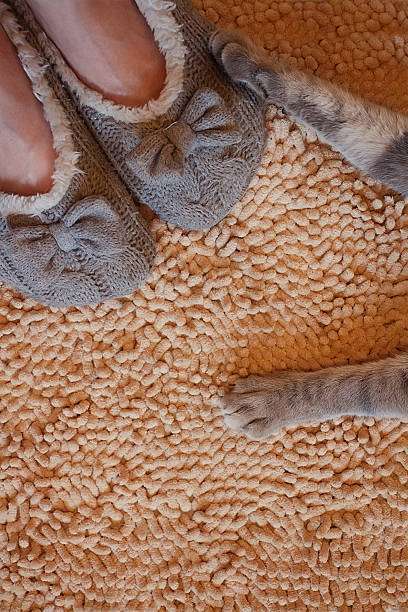
In pet-friendly households, composite bath mats with a rubber base often exhibit high stability. Rubber itself has good tear resistance, making it less prone to significant damage from repeated scratching by cats. More importantly, the surface of these bath mats typically features a short-pile or tightly woven structure, preventing hair from embedding deeply and keeping it on the surface, making daily cleaning with a vacuum cleaner or a simple shake easy.
For larger dogs, the rubber base provides more stable grip, reducing the risk of slipping on wet surfaces. Many pets are easily excited after a bath, and if the bath mat’s anti-slip properties are insufficient, accidents can easily occur. From a long-term use perspective, the rubber composite structure strikes a relatively balanced balance between grip resistance and safety, making it a common choice for many multi-pet households.
IV. Advantages and limitations of silicone materials in pet-friendly households
Silicone bath mats have gained increasing attention in recent years, especially among pet-owning households. Silicone itself contains no fibrous structure and has a smooth surface with a certain degree of friction, meaning that pet hair is virtually impossible to embed. This characteristic is particularly beneficial during heavy shedding seasons, as cleaning simply requires rinsing with water, avoiding the awkward situation of “the more you wash, the more hair sticks to your skin.”
In addition, silicone is relatively resistant to cat scratches, making it less prone to fraying or breakage after being scratched. However, it’s not without its flaws. Some silicone bath mats are quite firm underfoot, which may not be comfortable for pets to lie on for extended periods, and may also feel lacking in soft cushioning when walked on barefoot by humans. If your pet enjoys resting on a bath mat , silicone is more suitable as a localized anti-slip area than as its sole mat .
V. In-depth analysis of the durability logic of tightly woven polyester fibers
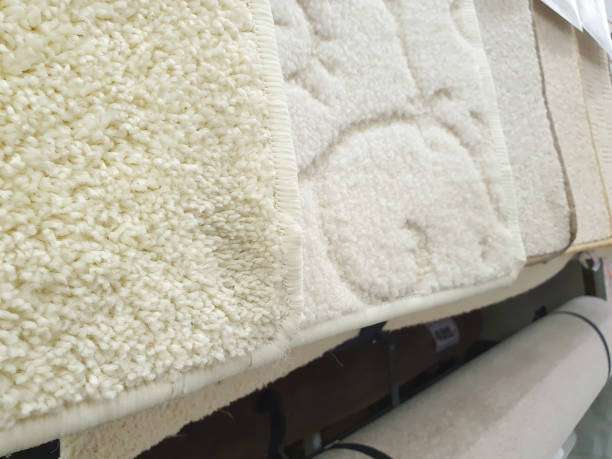
bath mats are a common product in today’s home furnishing market . However, the key factor in whether such mats are suitable for households with pets lies in their weave density. The tightly woven polyester fiber structure has a unique advantage: compared to long-pile or high-loft materials, it offers superior scratch resistance.
Long-pile or high-loft materials are often prone to deformation and damage from pet scratching, while the tightly woven polyester fiber structure is better able to resist such external scratching forces. Furthermore, it has a significant advantage in that it doesn’t easily trap pet hair. During a pet’s daily activities, hair inevitably sheds. With long-pile or high-loft materials, hair easily gets trapped and is difficult to clean.
The tightly woven polyester fiber structure means that most hair remains on the surface. This makes hair removal extremely simple; a simple pat or vacuuming is all it takes to remove the hair, as it doesn’t penetrate deep into the fibers.
The advantages of this tightly woven polyester fiber material also lie in its good balance. On the one hand, it provides a certain degree of softness, allowing pets or even owners to feel a comfortable touch when walking or standing on it. On the other hand, unlike some overly fluffy materials, it does not wear out quickly due to frequent use in a short period of time.
For small to medium-sized dogs or cats that don’t scratch much, these bath mats perform consistently well in terms of both user experience and durability. Small to medium-sized dogs are relatively small and have limited mobility; cats that don’t scratch much also cause less damage to the mat. The tightly woven polyester fiber mats can meet their daily needs while maintaining good condition for a longer period of time.
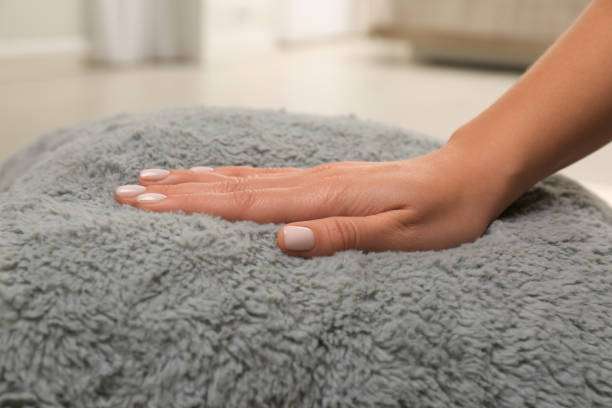
However, it’s crucial to note that the weave density of polyester fiber bath mats is a critical factor. Insufficient weave density, even with polyester fiber, can easily lead to problems. Cat claws are sharp, and if the mat’s weave density is too low, they can easily snag the threads, affecting the mat’s overall appearance and performance. Therefore, when purchasing polyester fiber mats, consumers shouldn’t just look at the material name on the product label, but pay closer attention to the actual feel of the mat. Touch the mat to feel its density and carefully observe its structure to determine if the weave density meets your family’s needs.
VI. The Practical Significance of PVC Anti-slip Material for Pet-Loving Families
PVC mats excel in scratch resistance, with an overall structure closer to an anti-slip mat than traditional fabric. For cats, the PVC surface is not suitable for scratching, thus significantly reducing scratching behavior. Hair also struggles to adhere, making cleaning very efficient.
In dog-owning households, the advantages of PVC mats lie primarily in their waterproof and anti-slip properties. Even if a pet’s paws are wet, the moisture won’t be absorbed in large quantities but will remain on the surface, making it easy to wipe dry or rinse quickly. This characteristic reduces the risk of the mat remaining damp inside, thus lowering the possibility of odors and bacterial growth. However, PVC material tends to feel harder underfoot, and its visual style leans more towards functionality; whether or not to accept it depends on the family’s trade-off between comfort and aesthetics.
7. Being scratch-resistant and not hiding lint does not mean it is completely maintenance-free.
Even if you choose a bath mat material that’s relatively suitable for pet-friendly households, it doesn’t mean you can completely ignore daily maintenance. Pet hair often contains dander and oil, which accumulate on the mat’s surface over time, affecting its anti-slip properties and hygiene. Being scratch-resistant and preventing hair accumulation only reduces the difficulty of maintenance, not eliminates the need for it.
In practical use, it is recommended that pet owners establish a more frequent cleaning routine, such as shortening the intervals between vacuuming or rinsing, so that hair and dirt are removed before they become stubborn residues. This habit not only extends the life of the mat but also makes the bathroom environment more friendly to both people and pets.
8. Material Selection Strategies for Different Pet-Loving Families
If your home is primarily cat-based, and your cat exhibits a strong scratching habit, then prioritize fiber-free mats made of silicone or PVC to effectively reduce snagging and breakage. For households with medium to large dogs, where stability and slip resistance are paramount, rubber-based composite mats are often more suitable. For households with relatively gentle pets who prioritize comfort, tightly woven polyester mats offer a compromise.
Ideally, the type of mat used in different areas should be appropriately matched based on the number, size, and behavior of the pets , rather than trying to solve all problems with a single mat . The needs of the bathing area, the area in front of the sink, and the transition area are not exactly the same, and the choice of materials should also be tailored accordingly.
9. From a long-term use perspective, choosing the right material means peace of mind.
Many pet owners make the same mistakes with their bath mats because they overlook the long-term impact of pet behavior on the material. Scratch resistance and hair-free properties aren’t just marketing gimmicks; they are key factors that directly determine whether you’ll need to frequently replace the mat and whether you’ll have to endure the cleaning hassle over the next few years. When your bath mat no longer wears out quickly due to your pet, your daily life will be much less troublesome.
For those who truly consider their pets family members, choosing a suitable bath mat is not just about keeping the floor clean, but also about ensuring a safer and more comfortable living space for both people and their pets. As long as the material is designed logically and usage habits are reasonable, a mat can remain durable, clean, and stable in a pet-friendly home.