Key considerations for pairing bath mat with floor tiles: Choosing the wrong type of tile from these 5 options can increase the risk of slipping

I. The Relationship Between Floor Tile Material and Anti-Slip Bath Mat
Many families focus only on the material, anti-slip texture, and number of suction cups when choosing a bathroom mat , neglecting the direct impact of tile type on its anti-slip effect. Different bathroom tile materials have varying surface friction, smoothness, and drainage characteristics, which means the same bathroom mat will perform drastically differently on different tiles. For example, even with an anti-slip mat , smooth glazed tiles may still slip due to localized water film or poor adhesion, while rough matte tiles or textured anti-slip tiles can better create friction with the mat , improving overall safety.
Besides friction, the absorbency and surface flatness of the tiles also affect the stability of a bath mat . While highly flat, non-absorbent tiles are easy to clean, they may shift in wet environments if the bath mat’s suction cups are not strong enough.
Conversely, highly absorbent tiles, although offering slightly higher friction, can accumulate water on the bottom of the bath mat over time , reducing its anti-slip properties. Therefore, the tile material and the bath mat’s anti-slip features must be compatible; otherwise, even the highest-performance mat cannot guarantee safety.
II. Slip Risks of Smooth Glazed Tiles
Smooth glazed ceramic tiles are a common material in modern bathrooms. Their smooth, glossy surface makes them easy to clean, but they have low friction when wet, making them extremely slippery. If a bath mat is laid on top of these tiles, and the bath mat’s suction cups are insufficient or the surface texture is not deep enough, it is very easy to slip when walking on it.
The risk of smooth glazed ceramic tiles is that water film forms quickly and does not dissipate easily. Even with a small amount of water, the friction can decrease rapidly, posing a safety hazard to pregnant women, the elderly, or children.
choosing a bath mat , smooth glazed ceramic tiles should be prioritized for their strong suction cups and high surface friction coefficient. Ideally, they should be paired with a mat surface with deep textures to create additional friction points and improve safety. Otherwise, even with the best mat material, it is prone to shifting or slipping.
III. Significant Advantages and Important Considerations of Matte Anti-slip Tiles
Matte anti-slip tiles have unique advantages. Their surface texture presents a natural appearance; this natural texture isn’t artificially sculpted into uniform patterns, but rather possesses a natural, irregular beauty. When the surface is wet, its friction is much higher than that of smooth tiles.
Smooth tiles have an overly flat surface, and when wet, water molecules form a lubricating film on the surface, greatly reducing friction. Matte anti-slip tiles, with their unique texture, can disrupt this lubricating film, naturally providing a certain degree of slip resistance, making walking on them safer.
When a bath mat is placed on matte tiles, the unique texture of the mat makes it relatively easy for the bottom of the bath mat to maintain a good seal with the floor. Even if the number of suction cups on the bottom of the mat is not excessive, it still provides a certain level of stability.
This is especially important for families with pets or pregnant women. Pets are active and energetic, often running and jumping around; pregnant women have limited mobility and their balance can be affected. Using these types of tiles with a non-slip mat significantly reduces the risk of slipping and provides a safer living environment for family members.
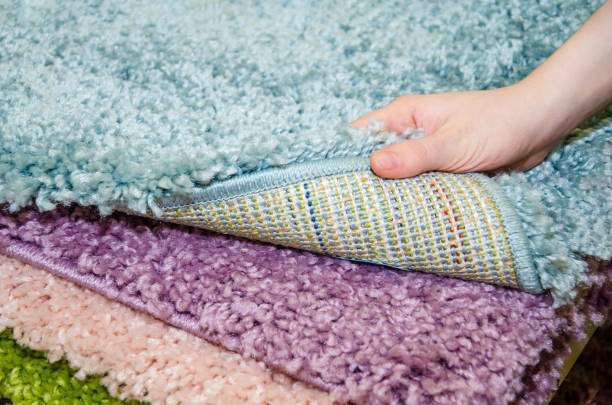
However, matte anti-slip tiles are not without their flaws and require some attention. Their surface texture is quite complex. While this complexity provides excellent anti-slip properties, it also presents a challenge for installation. If the bottom design of the mat is not well-designed—for example, if the bottom is not flat enough or not optimized for the texture of the matte tiles—gaps may appear in certain areas. These gaps can prevent the suction cups on the bottom of the mat from fully adhering to the ground, causing it to lift up or slip during use.
particularly pronounced when using thick-pile or multi-layered composite bath mats . Thick-pile mats, due to their denser pile, can affect the contact between the bottom and the ground; multi-layered composite mats, with their complex structure, are also prone to uneven bottoms. Therefore, when using these types of mats, special attention must be paid to the flatness of the bottom, ensuring it matches the texture of the floor tiles. This creates a stable, integrated anti-slip structure, maximizing the effectiveness of both matte anti-slip tiles and mats, and ensuring people’s safety.
IV. Compatibility of Anti-slip Grooved Tiles and Textured Tiles
Some bathrooms choose floor tiles with anti-slip grooves or special textures. These tiles have high friction when wet, but the surface is uneven. When a mat is placed on such tiles, if the suction cups on the bottom cannot penetrate deep into the grooves, the pressure may be uneven, causing the mat to wobble or lift when stepped on.
a bath mat for this type of tile , you should pay attention to whether the suction cup design matches the texture, or choose a material with high bottom flexibility that can closely conform to the uneven surface. The advantage of textured tiles is their natural anti-slip properties, but this places higher demands on the bottom design of the bath mat . Mats with poor compatibility can easily result in a situation where they “seem stable, but are actually dangerous.”
V. Challenges posed by glass ceramic tiles and smooth stone
In some modern bathroom renovations today, glass tiles or smooth natural stone are often chosen. These materials have unique advantages in decorating bathrooms; they are aesthetically pleasing and can create a stylish and sophisticated visual effect, making the bathroom look more high-end and elegant.
However, a drawback is that once these materials get wet, their surface friction becomes extremely low. Even with common suction cup mats on the floor, the suction cups of the bath mat may not be able to create sufficient negative pressure on the highly slippery surfaces of glass tiles and smooth natural stone. As a result, the bath mat may slide, posing a significant safety hazard.
For pregnant women, the elderly, and children, the risk of injury increases significantly when they are active on surfaces with extremely low friction. Pregnant women, whose mobility is relatively limited and whose center of gravity shifts, are more prone to slipping, which could cause serious harm to themselves and their fetus. The elderly have declining physical functions and more fragile bones, making them more susceptible to fractures and other serious consequences after a slip. Children are active and energetic, but their balance and self-protection abilities are not yet fully developed, making them extremely vulnerable to falls and injuries on slippery surfaces.
Given the smooth surface of these types of floor tiles, extra care is needed when choosing a bath mat. Choose a type with densely packed suction cups on the bottom for strong adhesion. Dense suction cups increase the contact area with the ground, thus improving adhesion and reducing the likelihood of slipping.
Additionally, the bath mat should have a deep surface texture to increase friction between the sole of your shoes and the mat, further enhancing walking safety. Furthermore, avoid choosing mats with thick pile or overly soft bottom materials. Thick pile materials tend to trap water and are slow to dry, making the floor more slippery; while overly soft bottom materials may not provide sufficient stable support for the body.
In addition, taking some localized anti-slip measures is also essential. For example, applying anti-slip strips to the edge of the bathtub. Anti-slip strips have good anti-slip properties and can provide additional protection when people enter and exit the bathtub, effectively reducing the risk of slipping. If you rely solely on bath mats for anti-slip without taking other auxiliary measures, the risk of slipping will still be relatively high, and it cannot fully guarantee people’s safety in the bathroom.
VI. The Influence of Tile Laying Method on Bath Mat Stability
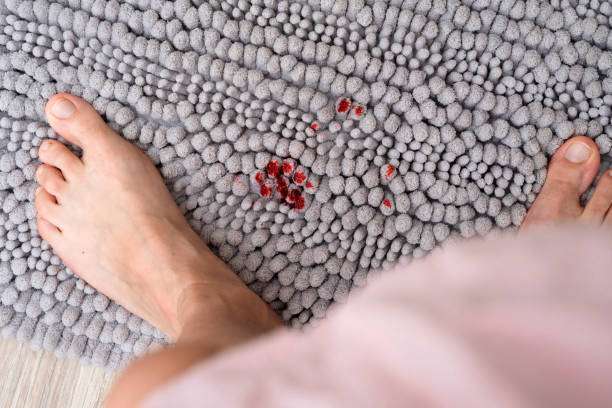
Besides the material, the way the tiles are laid also affects the anti-slip performance of a bath mat . A flat, level surface allows the suction cups to adhere evenly, while wide grout lines or uneven surfaces can cause localized adhesion failure, resulting in tilting or wobbling when stepped on. Longitudinal or diagonal tile laying, if the grout lines are irregular, can also increase the air layer between the bottom of the bath mat and the ground, reducing its anti-slip effect.
Therefore, when choosing a bath mat , you should not only consider the material and anti-slip features, but also the flatness of the floor tile surface and the laying method. If the floor tiles are uneven, it is best to choose a mat with a flexible bottom and strong adhesion to ensure that the mat can fit snugly against the ground when stepped on .
VII. Secondary effects of humidity and drainage conditions on mat performance
Humidity and drainage conditions amplify the differences in the anti-slip properties of floor tiles. If smooth glazed tiles have poor drainage, a water film may remain for a long time, causing the anti-slip mat to slide all over the place; while textured anti- slip tiles, even when wet, maintain a relatively stable performance due to their high friction.
Therefore, the choice of mats and floor tiles should take into account the direction of water flow, drainage speed, and daily humidity conditions. A mat with well-designed drainage holes can quickly wick away moisture, and when combined with the friction of the floor tiles, it improves overall slip resistance and safety. Ignoring this aspect will significantly diminish the user experience, even with a high-quality mat .
8. Safety recommendations for pairing different tiles with bath mats
bath mats with dense suction cups and deep surface textures ; matte anti-slip tiles are suitable for use with mats that have flexible bottoms and can conform to the texture ; textured or grooved tiles require ensuring that the suction cups match the uneven surface; glass tiles and smooth stone should have thicker anti-slip textures and consider additional anti-slip measures. In general, matching the material to the floor tile will maximize the anti-slip effect and reduce the risk of slipping.
IX. Conclusion
A bath mat ‘s anti-slip performance depends not only on its material and design but also on the material, texture, installation method, and humidity level of the floor tiles. Smooth glazed tiles, matte tiles, anti-slip grooved tiles, glass ceramic tiles, and smooth stone each have their own characteristics; choosing the wrong combination can significantly increase the risk of slipping. Understanding the interaction between the bath mat and the floor tiles, selecting the appropriate material and structure, and considering drainage and drying conditions are crucial to truly improving bathroom safety and allowing the bath mat to perform its intended anti-slip function.