Bath mat material friction comparison: Ranking of the actual anti-slip properties of 5 common materials

In bathroom safety, the anti-slip performance of bath mats is often overlooked yet crucial. Many people choose mats based on color, softness, and price, rarely considering whether the material can maintain a firm grip on the floor in a wet environment with wet feet, wet surfaces, and shower gel residue. In fact, a mat ‘s anti-slip properties largely depend not on thickness or brand, but on the material’s inherent friction characteristics and its stability in water.
Friction isn’t an abstract physical concept; rather, it’s the source of your sense of security the moment your feet touch the bath mat . It determines whether you can maintain your balance when turning, lifting your foot, or bending over. Different bath mat materials don’t show significant differences in performance when dry, but these differences become dramatically amplified in a wet environment.
This article will systematically compare the anti-slip friction of five of the most common bath mat materials in real-world usage scenarios, helping you understand which materials are truly reliable and safe choices, and which only appear to be anti-slip but actually harbor hidden risks.
Why is friction the core indicator for measuring the anti-slip performance of bath mats?
In a bathroom environment, a film of water often remains on the floor, and feet are frequently covered with residue from shower gel, shampoo, or sebum. These factors significantly reduce the coefficient of friction on the contact surface. The purpose of a bath mat is to provide an intermediary layer between the feet and the floor that can break up the water film and stabilize the force. If the surface of the bath mat material drops rapidly after getting wet, the soles of the feet will feel like they are stepping on a “lubricating film,” and even if the mat itself does not move, the person may slip.
Furthermore, friction is not a static value. During a shower, a person’s feet are constantly moving, and the direction and intensity of the force applied change. A high-quality bath mat material needs to maintain stable feedback under dynamic friction, rather than only appearing safe when standing still. This is why it’s difficult to judge a mat’s true anti-slip ability simply by touching it with your hand or lightly stepping on it a few times .
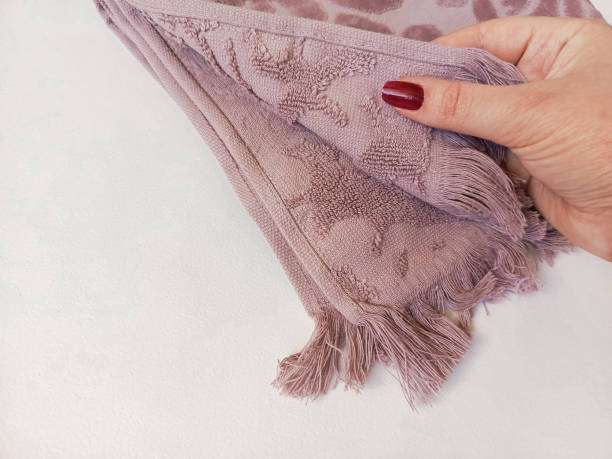
The first material: the wet friction advantage of natural rubber.
Among various bath mat materials, natural rubber is often considered one of the “ceilings” for its anti-slip performance. This isn’t just a marketing gimmick; it stems from the inherent molecular structure of rubber. Natural rubber has high surface energy, meaning it doesn’t easily form a continuous water film even when fully wet. This translates to the rubber surface still providing effective grip when pressure is applied by the foot.
In real-world use, rubber bath mats often feel stable and non-slip, even with shower gel foam on the soles of your feet, making it less likely to suddenly lose control. At the same time, rubber has moderate elasticity, preventing significant sagging when bearing body weight, thus ensuring stable friction transmission. However, natural rubber is not without its drawbacks. It is sensitive to its environment; prolonged exposure to high humidity and temperature, especially with insufficient ventilation, can cause it to age and develop odors. Therefore, rubber mats are more suitable for well-ventilated bathroom environments where they can be frequently air-dried.
The second material: TPE’s balanced friction performance
TPE, or thermoplastic elastomer, is a material that has become increasingly common in the mat manufacturing industry in recent years. It cleverly combines the excellent elasticity of rubber with the good stability of plastic, achieving a relatively balanced and just-right level of friction. Compared to some other materials, it avoids the problem of slipping due to insufficient friction, while also preventing unnecessary obstacles during use due to excessive friction.
High-quality TPE materials exhibit superior anti-slip performance in wet environments, significantly outperforming ordinary PVC materials. When the mat surface is wet, TPE provides reliable friction thanks to its unique material properties, greatly reducing the risk of slipping. Furthermore, compared to natural rubber, TPE is more resistant to aging, maintaining its performance for a longer period and less prone to aging and deterioration due to time and environmental factors. Moreover, TPE mats are easier to care for, requiring less effort and time for maintenance.
In terms of feel, TPE mats are generally slightly firmer than rubber mats. However, this firmness does not cause significant discomfort or intense pressure or pain when the feet contact the mat. On the contrary, this moderate firmness plays a positive role in dynamic movement, helping to maintain body stability and making users feel more secure when walking or standing on the mat.
TPE mats often feature carefully designed microtextures on their surface to further enhance friction. These tiny textured structures may seem insignificant, but they play a crucial role. When pressure is applied to the mat surface by the sole of the foot, these microtextures quickly wick away moisture that accumulates between the foot and the mat, effectively preventing slips caused by water accumulation.
In everyday home use, TPE mats often strike a good balance between safety and durability. For users who don’t want to invest too much time and money in mat maintenance and whose maintenance requirements are relatively low, a TPE bath mat is undoubtedly a very suitable choice, meeting their various needs for a safe, durable, and easy-to-care-for mat.
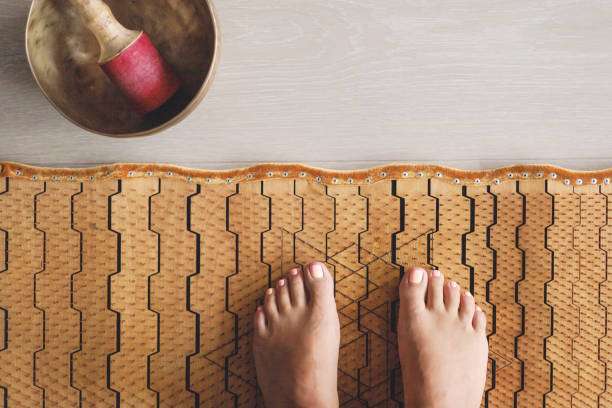
The third material: Silicone’s high adhesion and limitations.
Silicone is often perceived as a “sticky” material, leading many consumers to believe that silicone bath mats must be very non-slip. In fact, silicone does have high surface adhesion when dry or slightly damp, creating a noticeable “sticky” feeling when stepped on.
The problem is that silicone’s friction is highly sensitive to the thickness of the water film. Once the water layer is thick, especially when a continuous film forms between the foot and the bath mat , the silicone’s anti-slip performance fluctuates significantly. If the surface design is inadequate, water cannot drain away quickly enough, making it prone to sudden slippage at certain angles. This “instability” is the biggest drawback of silicone bath mats . For more active bathing scenarios, such as frequent turning or lifting the feet to wash, silicone mats need a well-designed surface structure to fully realize their anti-slip advantages.
The fourth material: PVC friction trap
PVC is arguably one of the most common bath mat materials on the market, and also one of the easiest for consumers to mistakenly choose. This is because PVC has many advantages: its production cost is quite low, and it is highly malleable during production, allowing it to be processed into various shapes and styles. Furthermore, it offers a wide range of choices in appearance design and color matching, mimicking the texture of natural materials to create a rustic feel, or boasting vibrant and eye-catching colors to satisfy the aesthetic needs of different consumers. These advantages make PVC bath mats very attractive in terms of price, often making them the first choice for consumers seeking value for money.
However, when we examine ordinary PVC mats from the crucial perspective of friction, we find their performance in wet environments to be far from satisfactory. The low surface energy of PVC means that when it comes into contact with water, a smooth film of water easily forms. Once this film forms, the friction between the foot and the mat decreases significantly. Many PVC bath mats appear to offer decent anti-slip properties when first used, providing a degree of safety. However, with increased use, the mat surface gradually becomes covered with limescale and cleaning agents. These limescale and cleaning agents further reduce the surface roughness, causing the anti-slip performance to rapidly diminish.
What’s even more alarming is that some PVC mats can shift as a whole when stepped on. When someone walks or stands on the mat, this sudden movement can create a dangerous feeling of being “suddenly pulled away,” catching them off guard and easily causing them to lose their balance and fall. This is one reason why PVC mats are frequently involved in slip-resistance accidents. In daily life, we shouldn’t ignore the shortcomings of PVC mats in terms of slip resistance simply because they are inexpensive and come in various styles. Instead, we should consider all factors and choose mat materials that are safer and more reliable.

The fifth material: Special scene representation of fabrics and composite fibers
Fabric or composite fiber mats are often the most comfortable to look at and feel, and they look more like home furnishings than functional equipment. However, from a friction perspective, their anti-slip performance depends heavily on the bottom structure, rather than the surface material itself.
In wet environments, the fabric surface easily absorbs water. Once saturated, the friction underfoot primarily comes from the resistance between the foot and the fabric, rather than a stable grip. If the bottom anti-slip layer is insufficiently designed, the entire bath mat is likely to shift under pressure. Therefore, this type of mat is more suitable for use in dry foot areas after bathing, rather than as a core anti-slip mat .
A comprehensive comparison of different materials in real-world use
In terms of wet friction stability alone, natural rubber usually takes the lead, followed by high-quality TPE, then well-designed silicone, while ordinary PVC and fabrics are clearly at a disadvantage. However, real-world use is not a laboratory test; the bathroom environment is complex and variable, and factors such as tile type, drainage speed, and frequency of use will all affect the final performance.
Therefore, from a more comprehensive and rational perspective, the so-called “anti-slip ranking” is not an absolute way to judge the quality of products; rather, it is a risk assessment logic based on certain concepts and methods.
When choosing materials, the key is not just to rely on this ranking, but to focus on whether the material you choose can consistently and stably provide sufficient friction to meet daily use needs in your specific home environment over a relatively long period of time. This is the most important and indispensable criterion.
Summarize
a bath mat cannot be simply summarized as “anti-slip design.” The material determines the upper limit of friction and its stability in a wet environment. Understanding how different materials perform in a wet state is crucial to avoid being misled by appearances.
When you actually stand in the bathroom, your feet on the bath mat , what you rely on isn’t the advertising slogans, but the frictional feedback from the material’s molecular structure. Choosing the right material is crucial; only then will the bath mat become a guardian of safety, not a hidden source of danger beneath your feet.