Bath Mat Anti-Slip Rating Revealed: 3 Key Criteria to Determine if You Will Slip

In the bathroom, a space that seems safe but harbors numerous hidden risks, bath mats are often severely underestimated. Many people, when choosing a bath mat , focus on whether the color is attractive, the size is suitable, and the price is affordable, neglecting a crucial question: how slip-resistant is it? In fact, a significant portion of bathroom slip accidents are not due to slippery tiles, but rather to the mat ‘s insufficient slip resistance, even becoming a “slip aid” in critical moments.
Understanding the slip resistance level of a bath mat and the rationale behind it is not only related to the comfort of daily bathing but also directly impacts the safety of family members, especially the elderly, pregnant women, and children.
This article will focus on the anti-slip rating of bath mats , starting with three truly decisive safety criteria. It systematically breaks down why mats can be slippery, what constitutes a truly anti-slip mat , and the hidden risks that consumers often overlook during selection and use. Only by understanding these underlying principles can we avoid the misconception that mats “look anti-slip but are actually dangerous.”
Why Bath Mat’s anti-slip rating is more important than you think.
Bathroom floors are completely different from other living spaces. They are constantly exposed to high humidity, a high water film, and high levels of detergent residue. Water forms an extremely thin yet slippery film on the tile surface, and foaming agents, skin care oils, and shampoo residue from toiletries further reduce friction. Under these conditions, even materials with a relatively high coefficient of friction can fail instantly.
a bath mat is essentially to create a stable frictional medium between the soles of the feet and the floor. However, if the bath mat ‘s anti-slip design is insufficient, or if the anti-slip structure deteriorates rapidly in wet conditions, it will not only fail to improve safety but may actually amplify risks due to overall displacement, curling, or sudden slippage. This is why many bathroom accidents do not occur when there is “no bath mat ,” but rather when “the wrong bath mat was chosen.”
Anti-slip rating is not just a simple marketing term, but the result of multiple structural and material factors working together. Truly reliable mats often undergo systematic testing during the design phase, focusing on wet friction, load variations, and foot dynamics.
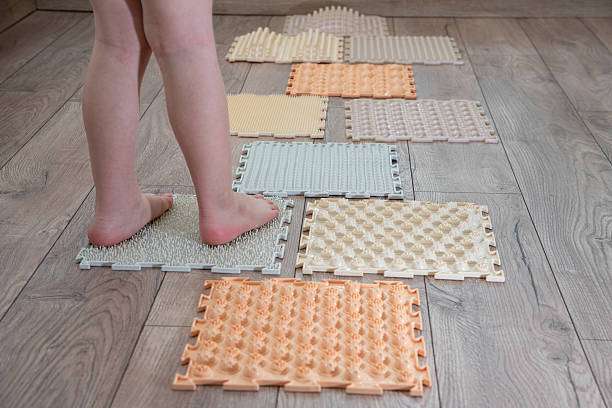
Judgment Criterion 1: Wet friction is the core of anti-slip properties.
When judging whether a bath mat is slip-resistant, the most easily overlooked yet most crucial indicator is wet friction. Many mats perform well when dry, feeling stable and solid underfoot, but once completely soaked in water, the friction drops significantly. Such mats offer almost no reliable protection in real-world use.
Wet friction is most significantly affected by two factors. First, the surface energy properties of the material itself. Natural rubber, high-quality TPE, and some high-density silicone retain a certain degree of grip after contact with water, while ordinary PVC, foamed plastics, or low-density rubber easily become smooth under the influence of a water film.
Second, whether the surface structure has water-repellent capabilities. Bath mats with fine textures or microchannel structures can quickly break down the water film when pressure is applied to the sole of the foot, thus restoring effective friction.
Many consumers mistakenly believe that “the softer the material, the more slip-resistant it is,” but this is not the case. Overly soft materials are prone to deformation under pressure, leading to unstable friction between the foot and the ground, which actually increases the likelihood of slipping. Truly excellent slip-resistant bath mats strike a balance between softness and support, providing stable friction feedback even when wet.
Judgment Criterion Two: The bottom adsorption structure determines whether the mat will shift as a whole.
Even if the surface of a bath mat has sufficient friction, it can still be dangerous to slide if the bottom is not firmly fixed to the ground. Many slip accidents occur not because the foot slips, but because the entire bath mat suddenly shifts forward or to the side, causing the person to lose their balance instantly.
The anti-slip structure on the bottom achieves stability primarily through adsorption, friction, or weight. Suction cups are the most common solution, but more suction cups don’t necessarily mean better results. The size, density, and elasticity of the suction cups all affect the adsorption effect.
If the suction cups are too rigid, they cannot create a vacuum on slightly uneven tiles, significantly reducing adsorption force. Conversely, if the suction cups are too densely packed, they can hinder drainage, leading to water accumulation at the bottom and weakening overall stability.
Furthermore, it’s worth noting that the specific type of floor tile greatly affects the adhesion of the mat. Among common tile types, glossy glazed tiles, with their smooth and flat surface, are generally the most suitable for pairing with suction cup mats.
This is because its smooth surface allows the suction cup to make better contact with the ground, achieving a more ideal adhesion effect, thus making the bath mat more stable during use. However, floor tiles such as antique tiles, matte tiles, and anti-slip tiles are different. Their surfaces have tiny textures, which, while offering advantages in anti-slip properties, present challenges for suction cup mats.
Because of the uneven surface, the suction cups cannot fully adhere to the ground, making it difficult to form an effective adhesive force, which can cause the bath mat to shift. For surfaces with micro-textures, mats that rely on a high-friction backing or their own weight for stability are more suitable. A high-friction backing increases the friction between the mat and the ground, making it less prone to slipping; while a mat that relies on its own weight is firmly fixed to the ground by its greater weight.
When determining the anti-slip rating of a bath mat, we must not rely solely on the parameters listed on the product. Product parameters are only a theoretical reference, while actual installation environments are complex and varied. Different types of floor tiles, the dryness or wetness of the ground, and other factors will affect the mat’s anti-slip performance. Therefore, it is essential to consider the actual installation environment comprehensively to accurately determine whether the mat’s anti-slip performance meets the requirements.
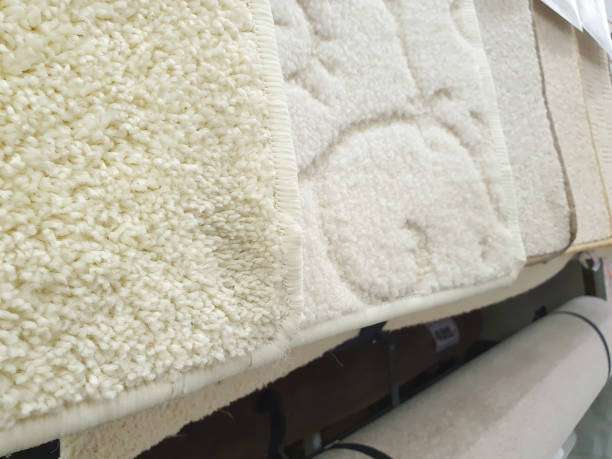
Judgment Criterion 3: Dynamic anti-slip performance reflects real-world usage scenarios.
Many bath mats perform stably in static tests, but in real-world use, footwork involves constant movement, turning, and changes in force. Dynamic slip resistance is the key factor that truly determines whether or not a slip will occur.
When a person takes a shower, the force exerted on the bath mat by their feet changes as they lift their feet, turn, or bend over. If the surface texture of the mat collapses rapidly under these changes in force, or if the bottom structure loses its balance under localized pressure, it can cause a sudden slippage. This is especially dangerous in transition areas where one foot is on the mat and the other on the tiles, where mats with insufficient anti-slip properties are most prone to causing slippage.
High-quality bath mats typically employ a multi-layered design to handle dynamic load variations. The top layer provides comfort and friction, the middle layer distributes pressure, and the bottom layer provides stability and fixation. While this structure is more expensive, it significantly reduces the incidence of accidents during actual use.
Three common misconceptions about anti-slip ratings
Many consumers are easily misled by seemingly professional but unreliable methods when choosing a bath mat . For example, they may assume safety based solely on the word “non-slip,” or judge stability by only looking at thickness and weight. These methods fail to accurately reflect the mat’s performance in real-world wet conditions.
Another common misconception is that thicker mats are safer. Overly thick mats can cause a significant shift in the center of gravity when stepped on, which can actually increase the risk of loss of balance, especially for the elderly and pregnant women. Truly safe non-slip mats are often not visually exaggerated, but rather meticulously designed in terms of details.
Some people believe that a higher price necessarily means better slip resistance, but if the design logic is flawed, even the most expensive materials cannot compensate for structural defects. Understanding the principles behind slip resistance levels is more important than simply pursuing a particular brand or price.
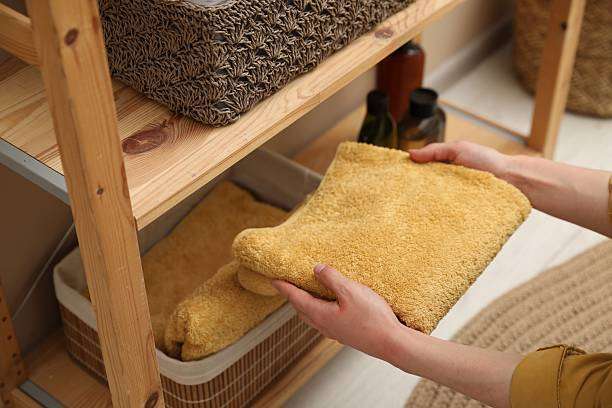
The relationship between anti-slip rating and family member safety
Different family members have vastly different needs regarding the anti-slip level of bath mats . Young people may prioritize comfort and aesthetics, while the elderly, pregnant women, and children rely more on stability and predictable friction feedback. For people with impaired balance, even a tiny slip can have serious consequences.
a mat for your home environment , the slip resistance rating should not be based on whether it will slip, but rather on whether it will remain stable under the most unfavorable conditions. This includes situations such as a completely wet floor, residual shower gel on the soles of your feet, and rapid changes in your center of gravity.
Long-term effects of use and maintenance on anti-slip performance
bath mats with high anti-slip ratings will show significant performance degradation if used long-term without proper maintenance. Scale, soap scum, and sebum residue will form an invisible lubricating film on the surface, reducing wet friction. The suction cups on the bottom will also lose their suction ability if they become clogged with dirt over a long period.
Regular cleaning, thorough drying, and avoiding prolonged folding and storage are all important prerequisites for maintaining anti-slip performance. Anti-slip rating is not a static property but changes continuously depending on usage.
Summarize
a bath mat is never determined by a single parameter. Wet friction, bottom stability, and dynamic performance all contribute to its true safety. Neglecting any one of these factors can cause the mat to fail at a crucial moment.
The next time you step into the bathroom and your feet land on a bath mat , you’re relying on more than just softness and comfort; you’re relying on a whole set of safety principles hidden behind the materials and structure. Understanding these principles is key to ensuring that the mat truly becomes protection, not a potential hazard.