Bath mat: 6 key differences between home and hotel use – don’t choose the wrong one!

Many people subconsciously refer to their hotel experience when choosing a bath mat . They walk into a clean and tidy hotel bathroom, find the bath mat soft, comfortable, and non-slip underfoot, and then buy the same “hotel-quality” at home. However, they often find that it quickly becomes smelly, deforms, and loses its anti-slip properties, even becoming more dangerous than not using a bath mat at all . The problem isn’t necessarily poor product quality, but rather a fact that most people overlook: the needs for bath mats for home use and hotel use are fundamentally different.
Bath mats are not a “one-size-fits-all” product. Their safety, hygiene, durability, and comfort all vary significantly depending on the usage scenario. Hotel bath mats are often designed for short-term, high-frequency, and quick-replacement use, while home bath mats are intended for long-term, consistent use by a fixed group of people in a repetitive environment. Confusing these two scenarios can easily lead to mistakes when purchasing, resulting in a poor experience or even serious safety hazards.
bath mat selection from the perspective of user needs . Understanding these differences will not only help you choose the right product, but also ensure that the mat truly serves safety and health, rather than being merely a formality.
Frequency of use is fundamentally different from usage cycle.
Hotel bathroom mats are used extremely frequently, but each use is very short-lived. A bathroom mat in a room may be used by different guests every day, but it also goes through a cleaning and replacement process almost every day. It is more like an extension of disposable consumables, with the design focus on “withstanding repeated cleaning” and “looking clean in a short time”.
Home bath mats are the complete opposite. Their use is consistent and continuous, typically performed daily by the same family members, but rarely washed daily. Many families wash their bath mats weekly or even monthly, meaning the mat needs to maintain its anti-slip and hygienic properties for an extended period. If a hotel-style bath mat , which relies on frequent replacements to maintain cleanliness , is used in a home environment, problems will quickly become apparent.
This cyclical difference dictates that home bath mats should focus more on long-term antibacterial, easy-drying, and anti-aging capabilities, rather than simply pursuing short-term softness or appearance.
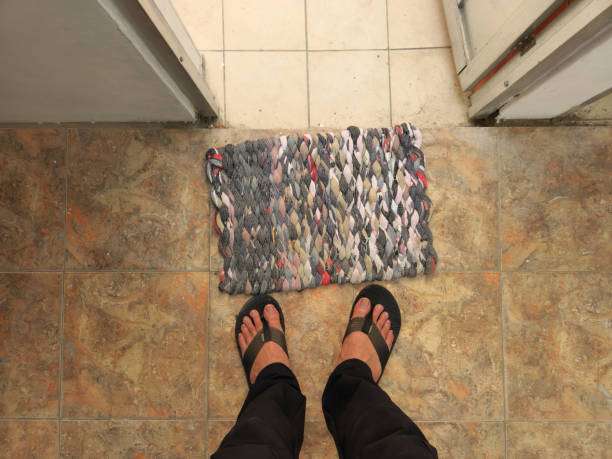
Differences in design approach due to the stability of the user base
Hotel bath mats cater to a highly diverse population. People of different weights, ages, and usage habits will wear them, so hotel bath mats typically tend towards a neutral design, avoiding overly extreme foot feel or structure. This “anyone can use” design often adopts a conservative approach to safety, but it is not deeply optimized for any particular group of people.
household mats remains highly stable. Factors such as whether there are elderly people, pregnant women, or children in the household, whether anyone has poor balance, and whether they are accustomed to walking barefoot or wearing slippers should directly influence the choice of a mat . For example, for the elderly, dynamic anti- slip properties and edge stability are far more important than softness; for children, absorbency and surface friction feedback are more crucial.
If families simply copy the “average design” of hotel bath mats , it often fails to truly meet the actual safety needs of family members.
The fundamental difference between cleaning and maintenance methods
Hotels boast professional cleaning and drying facilities that cannot be replicated in a home environment. High-temperature washing, powerful dehydration, and centralized drying are key reasons why hotel bath mats can be frequently changed and are less prone to mold. Many hotel bath mats are made of materials that are inherently subjected to high-frequency, high-temperature treatment, so their design prioritizes washability rather than their ability to dry naturally.
home bath mats are more gentle and irregular. Most households cannot perform high-temperature sterilization, so mats are mostly hand-washed or machine-washed, and the drying process is also limited by space and ventilation conditions. This requires home bath mats to have better natural drainage and quick-drying properties in terms of material; otherwise, even if they are washed frequently, bacteria and odors can still easily grow.
In today’s home furnishing market, it’s easy to find many bath mats labeled “hotel style” widely used in home environments. However, in reality, these “hotel style” bath mats often perform unsatisfactorily in home settings.
Upon closer examination, we can clearly see that this is primarily due to their over-reliance on external cleaning conditions. In other words, they do not rely on their own rational structural design to effectively maintain hygiene.
In home use, this over-reliance on external cleaning conditions makes it difficult for these bath mats to maintain good hygiene during daily use, resulting in their poor performance in the home environment.
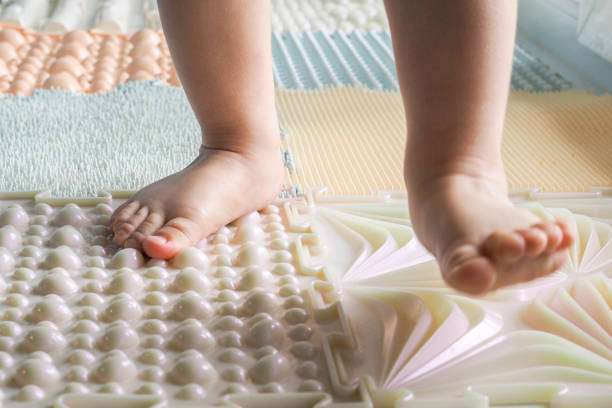
The anti-slip logic has different focuses in the two scenarios.
Hotel bathrooms typically use standardized floor tiles with a smooth surface and uniform drainage slope, providing a relatively stable foundation for the anti-slip design of bathroom mats . Therefore, hotel bathroom mats often achieve anti-slip properties through large-area bottom friction or base adhesion, which is quite effective on standard floors.
Bathroom floors in homes are far more complex. Different households may use matte tiles, non-slip tiles, antique-style tiles, or even have slightly sloping or uneven surfaces. In such environments, if the anti-slip design of the mat is not comprehensive enough, it is easy for parts of it to lift up or for the entire mat to shift.
Therefore, the requirements for anti-slip properties in home mats lean more towards “high adaptability” rather than performance under ideal conditions. Dynamic anti-slip capability, edge fit, and wet stability are all issues that are more easily amplified in the home environment.
Different trade-offs between comfort and safety priorities
In hotel settings, bath mats are often designed with a focus on providing exceptional comfort the moment a guest steps into the bath area. The soft texture, fluffy feel, and excellent underfoot sensation allow guests to experience immediate comfort and relaxation. This pleasant feel is arguably a key factor in enhancing the guest experience. While the comfort of the mats may decrease with repeated use, this is easily remedied by replacing them with new ones, restoring that delightful comfort.
However, unlike hotel mats, home mats require a more careful balance between comfort and safety. If a mat is designed to be too soft, it is prone to collapsing after prolonged use. Once the mat collapses, stepping on it can cause instability, increasing the risk of slipping and injury.
Furthermore, if the mat is too thick, it can create a noticeable height difference for elderly people and pregnant women when entering or exiting the bathing area. Elderly people have declining physical function and poor balance, so a height difference could make them unstable; pregnant women, with their limited mobility, would also face additional safety hazards. Therefore, a home environment needs a consistent and predictable feel underfoot, rather than just a fleeting, immediate sensation of “it feels great to step on.”
This explains why many people experience a sense of disappointment when using hotel-style mats at home: “They’re great at first, but become less and less comfortable over time.” Hotel mats prioritize immediate comfort, while home environments place greater emphasis on long-term stability and safety.
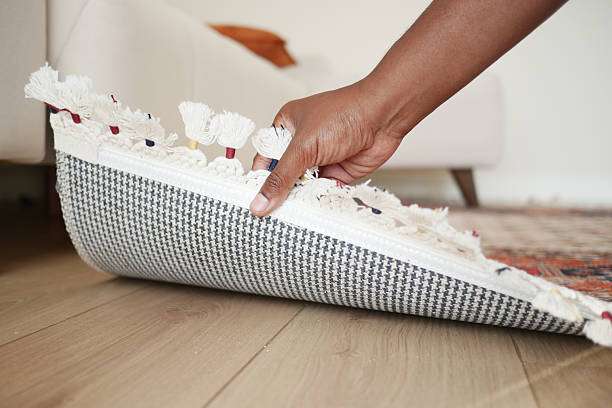
Different entities bearing health risks
In a hotel setting, hygiene risks are largely borne by the management system. Even if a particular mat has potential problems, it will be quickly discarded during cleaning and replacement. However, in a home environment, the ultimate bearer of hygiene risks is the family members themselves. A mat that is damp for a long time and not cleaned in a timely manner can repeatedly become a medium for the spread of bacteria and fungi.
This difference in risk-bearing entities means that when choosing a mat , families should prioritize antibacterial properties, material stability, and hygiene performance over long-term use, rather than just focusing on the initial experience.
Why “hotel standard” does not necessarily mean “best for families”?
Terms like “hotel-grade” and “commercial-grade” sound professional and reliable, but they often obscure the fact that different standards lead to different optimal solutions. Hotels prioritize efficiency, uniformity, and replaceability, while families prioritize long-term safety, health, and adaptability.
When we completely ignore the significant differences between usage scenarios in our daily lives and blindly apply the standards adopted by hotels directly and rigidly to our home life, we are particularly prone to creating hidden dangers that are not suitable for our actual situation behind those seemingly high-end and attractive choices. It’s important to understand that the usage scenarios of hotels and home life are quite different. Hotels pursue universality and standardization, while families focus more on personalization and applicability.
Take a bath mat, for example. It’s an item that comes into direct and intimate contact with our bodies every day, used extremely frequently, and closely related to our health and comfort. Therefore, we shouldn’t simply apply other people’s usage logic to it. Everyone’s lifestyle, physical condition, and home environment are different, and what works for others in terms of how they use and choose a mat may not work for us.
Summarize
bath mats isn’t about the quality of the materials, but rather the difference in needs. Understanding this is key to making the right choice from the vast array of products available. For families, a good bath mat isn’t necessarily the softest, thickest, or most hotel-like, but rather one that remains stable, non-slip, dry, and provides peace of mind through daily use.
When you prioritize the intended use case, the mat will go from “looking good” to “feeling safe to use”.