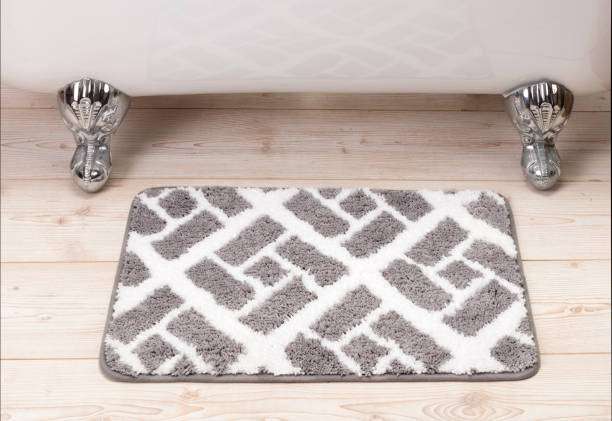
3 reasons behind the surge in demand for bath mats : What changes are taking place in the market for elderly products?

A neglected wave of consumption is beginning with bathroom floors.
If you shift your focus away from the bustling smartphones, smart home devices, and wearable health devices, you’ll discover a seemingly insignificant yet quietly booming category: the bath mat .
It’s neither high-tech nor fashionable, and for a long time, it was considered a cheap consumable tucked away in supermarket corners.
However, in recent years, the bath mat’s position in the elderly products market has fundamentally changed. Demand has continued to climb, product structure has rapidly upgraded, price ranges have widened significantly, and usage scenarios have become increasingly segmented.
This is not a coincidence, nor is it a fluctuation caused by short-term promotions. Rather, it is a long-term trend driven by changes in population structure, increased family risk awareness, and a restructuring of home lifestyles.
Bath mats are just an entry point; they reflect profound changes in the entire market for elderly care products.
To understand the sudden surge in demand for bath mats , we can’t just look at the “anti-slip” function. Instead, we need to examine three dimensions: the lifestyles of the elderly, family decision-making logic, and changing consumption concepts.
Below, we’ll explore these three key truths to understand this ongoing transformation.
Truth 1: Aging doesn’t happen gradually; it suddenly enters a high-risk phase.
Many people’s understanding of aging is limited to “more and more elderly people,” but what truly drives the explosive demand for elderly products is not the number of people themselves, but the timing when the elderly collectively enter a high-risk stage of life.
Among the changes in bodily functions, the bathroom is often the first space where risks are exposed.
As we age, muscle strength declines, balance weakens, and reaction speed slows down. These changes are not obvious in the living room and bedroom, but they are magnified infinitely in the slippery, confined space of the bathroom, where frequent turning and leg movements are required.
A seemingly insignificant slip can directly lead to a hip fracture, spinal cord injury, or even prolonged bed rest.
This consequence is not a natural result of “inevitable aging,” but rather a man-made risk caused by the living environment failing to keep pace with these physical changes.
This has led to a fundamental shift in families’ perception of bathroom safety. In the past, many families only started buying anti-slip products after an accident, treating bathroom mats as a “remedial measure.”
Now, more and more families are taking proactive measures, viewing bathroom mats as an essential part of senior living.
This shift from reactive to preventative measures is the primary driving force behind the surge in demand for bathroom mats.
More importantly, this risk awareness is not limited to the elderly themselves, but is amplified by their children, caregivers, and the healthcare system.
Children are no longer simply reminding their parents to “be careful when bathing,” but are directly involved in home environment modifications, choosing bath mats with stronger anti-slip properties, higher stability, and lower maintenance costs .
Hospitals, rehabilitation institutions, and community-based elderly care services are also constantly emphasizing the risk of falls at home, indirectly promoting the widespread adoption of related products.
Therefore, the increased demand for bath mats essentially represents a shift in the life risks of the elderly from “negligible” to “unacceptable.”
Once this shift occurs, it is difficult to reverse.
Truth 2: Products for the elderly are shifting from “makeshift” to “long-term use systems”.
For a long time, the design logic of products for the elderly was temporary and emergency-oriented.
Bath mats were no exception: they were inexpensive, made of simple materials, and had a casual appearance; as long as they were non-slip, they were considered to have fulfilled their purpose.
Consumers were also used to treating them as dispensable assistive devices, and would simply buy another one when it broke.
But now, this logic is being completely overturned.
As the life cycle of the elderly is lengthened, many families are realizing that so-called “elderly care products” are not short-term transitional items, but rather part of a living system that needs to be used stably for a long time.
Bath mats are no longer just temporary rubber sheets laid on the floor, but a key component of the bathroom safety system.
This shift is directly reflected in product demand.
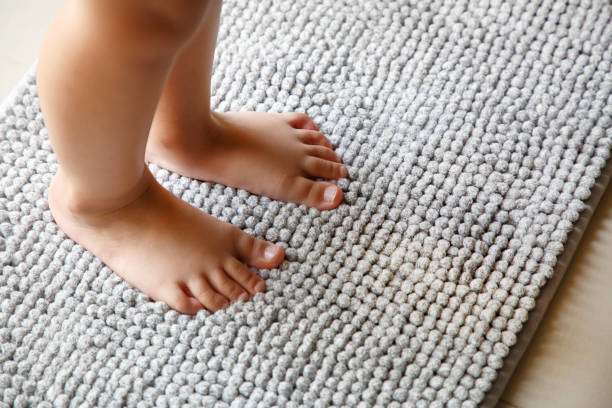
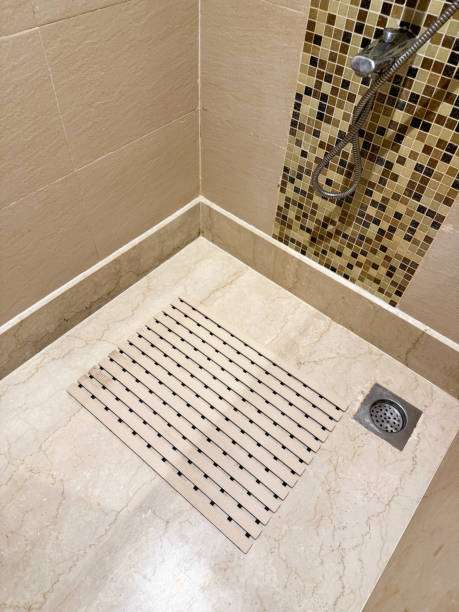
Consumers are starting to pay attention to whether bath mats will curl at the edges, harden or develop an odor over long-term use, easily breed bacteria, irritate the skin, affect drain drainage, and are easy to clean and replace.
These issues were almost ignored in the past, but now they have become central to purchasing decisions.
At the same time, the market for senior care products is rapidly becoming more professional.
Brands are no longer just selling single products, but providing comprehensive solutions for senior living scenarios.
The compatibility between bath mats and handrails, non-slip slippers, and seated bathing equipment is beginning to be seriously considered.
Size, thickness, and materials are all differentiated based on different bathroom structures and the user’s physical condition.
This systematic thinking transformed bath mats from a low-barrier-to-entry product category into a functional product with professional attributes.
Prices rose accordingly, brand loyalty began to develop, and repeat purchase rates increased.
The surge in demand was not merely an increase in quantity, but a comprehensive improvement in quality and value.
Truth 3: Bath mats are becoming a symbolic form of family responsibility.
In the market for products for the elderly, there is a type of product whose purchase motivation is quite unique.
These products do not entirely stem from the user’s active needs, but rather from the sense of responsibility among family members.
Bath mats are a typical example of this type of product.
For many elderly people, they don’t see the need for extra protection, and may even feel that using a bath mat is “unnecessary” or “makes them look old.”
The real driving force behind these purchases is often their children, spouses, or even caregivers.
This imbues their consumption logic with a clear emotional and responsibility-driven element.
When children choose something for their parents, they’re not just buying a non-slip gadget, but a sense of security.
They hope that this seemingly simple item will transform their anxieties about not being able to be with their parents at all times into concrete protective measures.
This mentality makes consumers more willing to pay a premium for safety, reliability, and durability.
This is why bath mats are increasingly being seen as gifts and part of family decisions.
Many people purchase bathroom safety products as a set when their parents move, return home from the hospital, start living alone, or enter old age, with a bath mat almost always being a must-have.
It is no longer a randomly purchased consumable, but a symbolic sign of family care.
This shift in consumer psychology has, in turn, driven the evolution of product design.
Appearance is no longer entirely ignored; color, feel, and visual comfort are now receiving attention.
Consumers want bath mats to look less like medical devices and more like a part of everyday life.
This trend towards de-aging design is a significant signal of the overall upgrading of the elderly care products market.
Looking at the profound changes in the market for elderly products
When we broaden our perspective beyond individual products, we find that the surge in demand for bath mats is actually a microcosm of the structural changes in the entire market for elderly products.
Old age is no longer seen as a brief period of decline, but rather as an independent life cycle that requires careful planning and long-term maintenance.
The market is shifting from price-driven to value-driven, from single-function to scenario-based systems, and from reactive to proactive prevention.
In this sense, bath mats are just the first visible signal; many more seemingly ordinary household products will undergo similar upgrades in the future.
For brands and content creators, understanding this shift is more important than simply chasing sales figures.
The real opportunity lies not in selling more bath mats , but in participating in reshaping safety standards and the living experience of seniors.
Conclusion: Beneath the surface lies a turning point for an entire era.
A bath mat laid on the floor may seem like a small detail in life, but these details form the foundation of security for senior living.
The surge in demand for bath mats is not a random market fluctuation, but rather the result of the combined effects of family structure, risk awareness, and consumer values.
As more and more families begin to take bathroom floor safety seriously, it indicates that the market for elderly care products has entered a new phase.
The key words for this phase are no longer cheap, makeshift, or just functional, but rather safety, longevity, and trustworthiness.
And all of this is just the beginning.
FAQ
- Question 1: Is the growth in demand for bath mats merely a short-term benefit of an aging population?
No. The growth in demand for bath mats is based on long-term demographic changes and increased awareness of home safety. As long as older adults wish to maintain independent living, this demand will be sustainable, rather than a short-term benefit.
- Question 2: Why did bath mats become popular earlier than other products for the elderly?
Because the bathroom is one of the spaces with the highest risk of falls for the elderly, and the renovation cost is low and the effect is direct, making it easier for families to start with products like bath mats to upgrade their safety.
- Question 3: Will the role of bath mats in the elderly care products market continue to expand in the future?
Yes. With the specialization and systematization of products, bath mats will no longer exist in isolation, but will become a basic component in overall bathroom safety solutions, and their importance will only increase further.