On a bath mat? A 5-step scientific method to thoroughly clean a silicone bath mat.

Silicone bath mats are popular in home bathrooms due to their softness, non-slip properties, and ease of cleaning.
However, even silicone materials inevitably accumulate soap scum, limescale, dead skin cells, and soap residue over time.
Soap scum not only affects aesthetics but can also become a breeding ground for bacteria and fungi, increasing bathroom hygiene risks.
Many consumers mistakenly believe that silicone materials do not require deep cleaning and can be simply rinsed, but in reality, stubborn soap scum often adheres to grooves, textures, and suction cup crevices, making it difficult to remove completely with ordinary water.
This article will address the cleaning challenges of silicone bathroom mats, providing a detailed analysis of methods for thoroughly removing soap scum through five scientific steps, and offering daily maintenance tips to help families maintain a clean and healthy bathroom.
The formation and hazards of soap scum
Soap scum is mainly composed of soap residue, mineral ions, and skin secretions.
During use, moisture and soap residue adhere to the surface and grooves of a bath mat, forming a hard, white deposit through repeated wetting and drying.
While silicone itself does not absorb water, its soft surface and textured structure make it easy for soap scum to adhere, especially in the suction cups and edge grooves.
Over time, accumulated soap scum not only roughens and discolors the bath mat surface but can also become a breeding ground for bacteria and fungi, posing a health risk to family members, especially children and those with athlete’s foot.
In addition, soap scum reduces the anti-slip properties of a bath mat.
Slippery soap scum covering the anti-slip grooves reduces friction between the foot and the bath mat, increasing the risk of slipping.
Regular and proper cleaning of soap scum can not only extend the lifespan of your bath mat but also improve its anti-slip properties and hygiene.
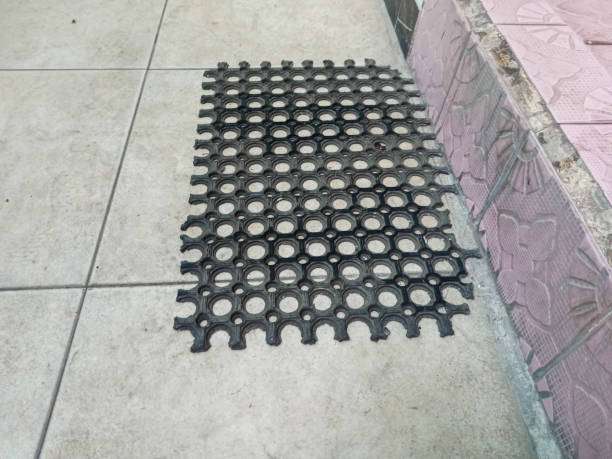
Step 1: Preliminary rinsing to remove surface residue
The first step in cleaning a silicone bath mat is to thoroughly rinse away surface moisture and loose dirt.
Rinsing with warm water removes dead skin cells and loose soap residue, while softening some of the soap scum.
When rinsing, lay the bath mat flat or hang it so that water flows over each groove and the bottom of the suction cups.
This initial rinsing makes subsequent cleaning easier and allows cleaning agents to penetrate stubborn dirt more effectively.
If there is a lot of water on the surface of the bath mat or it has not been cleaned for a long time, you can first use a soft-bristled brush to gently brush the surface to loosen the deposits.
Be careful not to use a hard brush or wire brush, so as not to scratch the silicone surface, affecting the texture and anti-slip effect.
Step 2: Scientifically Selecting Cleaning Agents
Silicone has good resistance to acids and alkalis, but strong acids or alkalis may damage the material or leave an odor.
For proper cleaning of soap scum, it is recommended to choose mild detergents, such as:
- Neutral dish soap
- White vinegar
- Baking soda solution
White vinegar can dissolve mineral deposits and soap scum, while baking soda acts as a mild abrasive to help remove stubborn dirt adhering to grooves.
When using a mixture of white vinegar and baking soda, pay attention to the gas produced by the foaming reaction and the acid/alkali concentration to ensure material safety.
Before using a cleaning agent, test it on an inconspicuous area of the bath mat to ensure the material is not damaged.
Choosing the right cleaning agent not only improves cleaning efficiency but also avoids chemical residue and material aging.
Step 3: Soaking to soften stubborn soap scum
For deep soap scum and groove buildup, scrubbing alone is not very effective.
In this case, soak the bath mat in a mixture of warm water and detergent for 10 to 20 minutes to soften the soap scum.
During soaking, the water temperature should not be too high to avoid deforming the silicone material or reducing its elasticity.
Softened soap scum is easier to scrub and rinse away.
For particularly stubborn suction cup crevices, use a toothbrush or small brush to gently scrub, ensuring every corner is clean.
Soaking not only removes soap scum, but also helps inhibit microbial growth, reduce odors, and prepare the skin for subsequent drying.
Step 4: Thorough scrubbing and rinsing
After soaking and softening, use a soft-bristled brush or toothbrush to thoroughly remove any remaining soap scum along the grooves, suction cups, and edge crevices.
Scrub in the direction of the texture to avoid damaging the anti-slip design.
After scrubbing, rinse thoroughly with plenty of water to ensure all detergent and dirt are removed.
During rinsing, you can repeatedly turn the item over to allow water to wash the bottom of each groove and suction cup crevices, preventing any residual moisture and chemicals.
Scrubbing and rinsing are key steps to ensure the bath mat is clean; when done properly, they can restore the smoothness and anti-slip properties of the silicone surface.
Step 5: Quick drying and air drying
After cleaning, rapid drying is crucial to prevent soap scum from re-accumulating and to inhibit microbial growth.
Bath mats should be hung or laid flat in a well-ventilated area, avoiding folding or stacking.
Good ventilation accelerates moisture evaporation, reducing odors and mold growth.
If possible, sun-dry the bath mat; ultraviolet rays help kill bacteria and improve hygiene.
After drying, store the bath mat in a dry, well-ventilated corner of the bathroom, avoiding prolonged storage while it remains damp.
For daily use, shake it dry or rinse it quickly after each shower to maintain hygiene for the next use.
Routine maintenance tips
In addition to the five-step cleaning method, daily maintenance can also effectively slow down the buildup of soap scum.
- Rinse the surface of the bath mat promptly after each use to remove soap residue and dead skin cells.
- Keep the bathroom well-ventilated to allow the bath mat to dry quickly.
- Regularly check the suction cups and edge grooves; if initial soap scum buildup is found, wipe it with a damp cloth or gently brush it with a small brush to prevent stubborn buildup.
- Based on the frequency of use and the number of family members, schedule a deep cleaning cycle scientifically, generally every two weeks to once a month, to keep the bath mat clean and hygienic.
With proper cleaning and daily maintenance, silicone bath mats retain their anti-slip and comfortable properties while minimizing soap scum, microorganisms, and odors, making home bathrooms safer and healthier.
FAQ
Question 1: How often should a silicone bath mat be deep cleaned?
It is recommended to perform deep cleaning every two weeks to one month. The specific frequency can be adjusted according to the number of users and the frequency of use. If the bath mat is used frequently or shared by multiple people, the cleaning interval should be shortened.
Question 2: What if regular rinsing can’t remove soap scum?
For stubborn soap scum, soak it in warm water and mild detergent for 10 to 20 minutes, then use a soft-bristled brush or toothbrush to scrub the grooves and suction cup crevices, and finally rinse it clean.
Question 3: Can silicone bath mats be sterilized with high temperatures?
Silicone material has limited heat resistance, so the water temperature should not be too high during cleaning to avoid deformation or reduced elasticity. It is recommended to use warm water with a cleaning agent, and then further sterilize by air-drying or sun-drying.