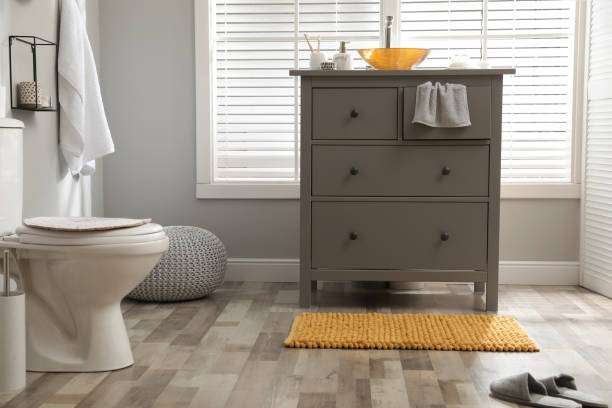
Bath mat more slippery? 3 mechanisms reveal the slip risk caused by surface wet film.

The bathroom, as one of the most slip-prone spaces in the home, is often underestimated in its danger. Many people believe that simply laying down a bath mat ensures safety while showering. However, the reality is far more complex. While bath mats do provide some slip resistance, excessive surface moisture, especially after prolonged use or repeated footsteps, can actually become a cause of slips. Understanding the formation and flow of a wet film on the surface, as well as the water absorption behavior of the fibers, is key to comprehending the slipperiness of bath mats . From a scientific perspective, this risk can be attributed to three main mechanisms.
Mechanism 1: Formation of surface water film and liquid lubrication effect
the bath mat during a shower , if the moisture cannot be quickly absorbed or dispersed, a continuous water film will form on the surface. Even if this water film is only 0.1 to 0.5 millimeters thick, it is enough to form a liquid lubricant layer between the foot and the bath mat , thereby significantly reducing the coefficient of friction.
Reduced friction means that the soles of the feet, which normally rely on fiber friction for stable support, are more prone to slipping when stepping on them. This is especially true when wearing bathroom slippers or walking barefoot, where insufficient friction can cause a slight shift in the body’s center of gravity, potentially leading to a slip. The surface water film not only reduces friction but also creates localized water flow with each step, resulting in noticeable fluctuations in friction between the sole of the foot and the bath mat when stepping on it with wet feet, further increasing the unpredictability of slipping.
The water absorption rate, amount, and drainage capacity of fiber materials directly affect the duration of the water film. Although microfiber has a strong water absorption capacity, when the surface is repeatedly stepped on, the internal moisture is squeezed out, and a water film may still form. Cotton absorbs water and expands more slowly, so surface moisture may remain for longer in the initial stages. This is why some people still feel that walking on a wet and slippery surface even after using an absorbent bath mat .
Mechanism 2: Foot pressure distribution and local fluid slippage
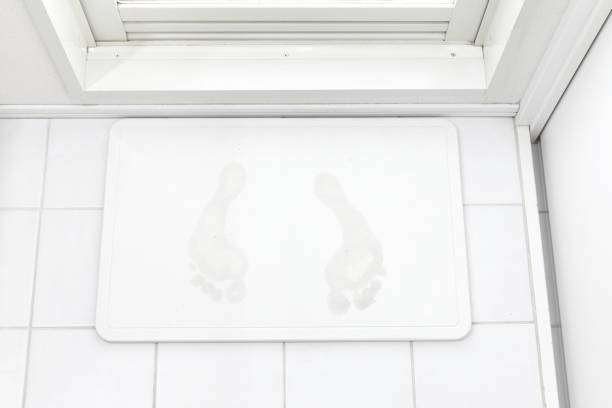
The second mechanism involves the distribution of pressure on the sole of the foot and the movement of fluid between the fibers. When a person stands or walks, the pressure on the sole of the foot is not uniform, but concentrated in the heel, the ball of the foot, and the toes. When stepping on a wet bath mat , the localized pressure squeezes some of the water into the surrounding area, creating tiny water droplets. These droplets may move along the fiber gaps and even seep into the edges of the bath mat , altering the local friction conditions.
The result of localized fluid slippage is that a certain area of the foot instantly changes from a high-friction state to a low-friction state. This sudden change can easily cause the user to feel as if they are “stepping into thin air” or “slipping.” In the elderly, pregnant women, or people with mobility impairments, this slight slippage caused by the instantaneous change in localized friction can develop into a complete loss of balance and a fall.
Furthermore, when the surface area of a bath mat is limited, the change in foot pressure when a foot steps out of the edge and contacts the wet tiles further exacerbates the risk of slipping. In other words, the wet film effect is not only related to the material, but also closely related to the user’s weight, foot shape, and standing posture.
Mechanism 3: Fiber resilience and surface unevenness leading to moisture redistribution
The third mechanism stems from the inherent physical properties of bath mat fibers. Whether cotton or microfiber , bath mat fibers undergo slight deformation after absorbing water and swelling. During walking, the elastic rebound of the fibers pushes some of the absorbed water back to the surface or adjacent areas, forming a new moist layer. This process is particularly noticeable after continuous use by multiple people, as the absorbed water returns to the surface through rebound and compression, increasing the thickness of the surface wet film.
The redistribution of moisture caused by fiber rebound can also create uneven wet areas. For example, the center of a bath mat may become saturated with water, while the edges may be relatively dry. When a person walks or turns, the coefficient of friction in the area in contact with the foot changes rapidly, creating a risk of slipping. This is why some bath mats feel dry during a single use, but tend to become increasingly slippery with continuous use.
The cumulative effect of slippery risks
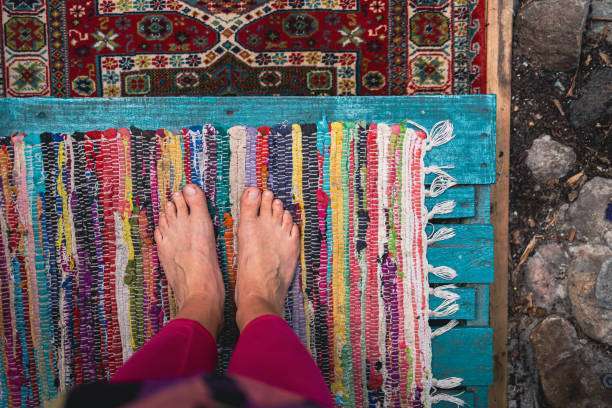
These three mechanisms often work simultaneously. The instant a foot steps on a bath mat , the surface water film provides a low-friction environment, localized pressure causes water to slide away, and the rebounding fibers continuously squeeze out moisture, creating humidity fluctuations. The risk of slipping is thus compounded, especially noticeable in high-frequency use or multi-person households. What should be anti-slip protection can, if the wet film effect and material properties are ignored, become a potential hazard.
It is worth noting that the thickness, fiber density, and anti-slip design on the back of the bath mat all affect the formation of the wet film and the distribution of liquid. For example, a bath mat with raised or recessed dots on the back can improve contact stability and reduce slippage when stepped on, but if the fiber surface does not absorb water evenly, localized slippage may still occur.
How to reduce the risk of slipping caused by surface wet film
Having understood the mechanism, strategies to reduce the risk of slippery surfaces can be approached from three aspects. First, material selection: prioritize fiber materials with fast water absorption and ample internal drainage channels to allow water to quickly penetrate and reduce its time on the surface. Second, size and layout: ensure the bath mat covers main walking paths to prevent feet from stepping outside the anti-slip zone and coming into contact with wet tiles. Third, cleaning and drying management: promptly remove excess water from the bath mat and regularly air it out to prevent prolonged dampness that can lead to a persistent water film on the surface.
Meanwhile, for the elderly or those with mobility impairments, additional grab bars or supports can be added to reduce reliance on friction when shifting weight. While the wet film effect cannot be completely eliminated, the risk of slipping can be significantly reduced through a proper combination of materials, sizes, layouts, and assistive facilities.
Conclusion
Bath mats are not simply non-slip decorations; their safety highly depends on material properties, surface moisture management, and usage habits. The presence of a wet film on the surface, water slippage caused by foot pressure, and redistribution due to fiber rebound are the core mechanisms that lead to the “wetter, the slipperier” phenomenon. Understanding these three points helps consumers make informed decisions when purchasing and using bath mats , ensuring they truly provide anti-slip protection in daily life, rather than relying on subjective feelings of security.
Anti-slip properties cannot be completely solved by a single bath mat ; rather, they require a comprehensive approach considering materials, dimensions, layout, maintenance, and user behavior. Only when all these conditions are properly matched can a bath mat truly realize its full value.
FAQ
Question 1: Should bath mats be patted dry before use? Keeping the surface of the bath mat as dry as possible can reduce the risk of a wet film, especially when multiple people are using it continuously. Choosing a material that absorbs water quickly and has good drainage can reduce slippage when stepped on.
Question 2: Is the risk of slippage directly related to the material of
the bath mat ? Yes. Microfiber and cotton absorb water differently, and their wet film formation and liquid distribution characteristics are different. However, even with materials that have good water absorption, slippage can still occur if surface moisture is not drained in time.
Question 3: Is it necessary to replace the bath mat regularly to ensure safety?
Yes. With prolonged use, the fibers may wear down, absorbency may decrease, and the anti-slip structure on the back may fail, all of which increase the risk of slipping. Regular replacement and cleaning are important measures to ensure safety.