Bath mat size dangerous? Analysis of how rectangular and square mats fit in 4 different spaces.

In home safety statistics, the bathroom is consistently a space that is repeatedly mentioned yet often overlooked. Slippery floors, limited space, and frequent shifts in weight make this seemingly ordinary area a high-risk zone for falls. Among all anti-slip methods, bath mats are considered the lowest-cost and most direct solution. However, the real problem is that many families, despite purchasing bath mats , do not actually reduce their risks; in some cases, an incorrectly sized bath mat can even become a new hazard.
When choosing a bath mat , most consumers focus on materials, slip resistance, absorbency, and design, rarely considering a seemingly simple yet crucial question: is the size truly suitable for the space? In fact, a larger bath mat isn’t necessarily safer, nor can simply being laid out anywhere guarantee safety. Choosing the wrong size not only fails to cover key foot areas but can also increase the risk of slipping due to curled edges, shifting, and gaps in the floor.
This article will delve into the safety logic behind size selection from the perspectives of spatial structure and usage behavior. Through four typical spatial scenarios, it will compare the adaptation differences between long and rectangular bath mats in actual use, helping you understand why size selection itself is a safety decision.
Overlooked risk factors: Bath mats are not “safe just by laying them down”.
In many homes, bath mats are more like decorative accessories. After showering, people casually step onto them, find their feet aren’t cold, and the floor doesn’t look as wet, so they naturally assume they’ve fulfilled their purpose. But from a safety perspective, this understanding is too superficial.
The true logic of anti-slip isn’t about “whether there’s a bath mat ,” but rather “whether a person steps on a stable, non-slip, and continuously covered surface at key points of movement.” A person’s movements in the bathroom are not static standing, but frequently involve lifting feet, turning, stepping, and bending over. These movements constantly change the center of gravity, and whether the bath mat ‘s coverage area adequately accommodates these shifts directly determines its effectiveness.
If the bath mat is too small, it’s easy for one foot to land on the mat while the other lands on the wet, slippery tiles when getting out of the bath or turning over. This asymmetrical difference in friction can instantly disrupt balance, posing a greater risk, especially to the elderly and those with mobility issues.
Conversely, if the size is too large but the shape does not fit the space structure, the edges are easily squeezed by doors, toilets, or corners, causing the edges to curl or pile up in some areas. This visually inconspicuous height difference is more likely to cause tripping in low light.
Therefore, choosing the right size is not simply a matter of “buying big rather than small,” but rather a delicate judgment that requires consideration of the spatial form and usage path.
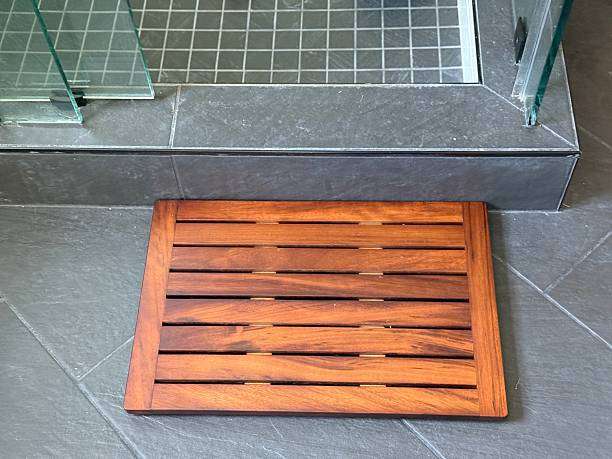
Space 1: Standard independent shower area; why is a long, narrow bath mat safer?
In modern homes, a separate shower area is one of the most common layouts. Whether separated by a glass partition or a shower curtain, these spaces share the common characteristics of a clear entrance and exit, with a distinct linear structure in the walking path. After showering, people typically take one or two steps out of the shower area, then stop to dry themselves or grab a towel.
In this situation, dangerous movements often occur within a short period of time: the first step after bathing and before the center of gravity shifts completely to the dry area. If the coverage of the bath mat cannot continuously support these movements, a safety gap will be created.
The long, narrow shape has a natural advantage in this setting. It can be laid longitudinally along the direction of exiting the bath, ensuring that the feet are always on a non-slip surface before taking the first step, the second step, and even before standing still. This continuous coverage effectively reduces friction differences caused by footsteps, making the weight transfer process smoother.
In contrast, while square shapes may appear more centered and aesthetically pleasing, if their size is insufficient to cover the entire step, they often only support the first step. The moment the second step lands on the tile is precisely when the body is most unstable, thus amplifying the risk.
In addition, the elongated shape is easier to control in terms of width, does not take up too much space, and is not easily rubbed by the shower door, making it more stable in the long run.
Space 2: Long and narrow bathroom; excessively large dimensions can actually create obstacles.
In some older houses or small apartments, bathrooms are often long and narrow. The sink, toilet, and shower area are arranged in a straight line, leaving limited space for movement. In such spaces, the choice of bath mat size is particularly crucial.
Many people mistakenly believe that small spaces require large areas of bath mat for “comprehensive anti-slip,” but the reality is quite the opposite. Overly large square mats often encroach on the width of the passageway, forcing people to step on the edges when passing sideways. Due to uneven stress, the edge areas are more prone to displacement or curling.
In this type of space, long, narrow strips can be laid along the passageway, with the width controlled within the natural foothold, ensuring slip-resistant coverage without interfering with daily passage. When people walk from the sink to the shower area or out of the shower area, the footsteps are clearly defined, and the area underfoot is stable, making it safer.
It’s important to note that in long, narrow spaces, a bath mat isn’t necessarily better the longer it is. If it extends to cover the bottom of the toilet or sink, it can actually wrinkle due to pressure from the fixture. Therefore, the ideal size is to just cover the wettest, most frequently stepped-on areas, rather than trying to “patch it all the way to the bottom.”
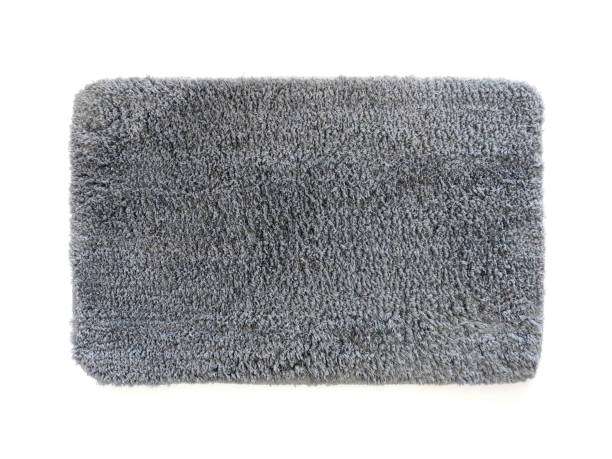
Space 3: Open-plan bathroom with no separate wet and dry areas; the advantages of a square bath mat become apparent.
Not all bathrooms have clear wet and dry separation. In some open-plan designs or renovated spaces, the shower area is not completely separated from the washbasin area, and moisture and water droplets can easily spread on the floor. In this case, the risk of slipping is no longer concentrated at a single exit, but rather distributed over a relatively wide area.
In this case, a large, square or near-square bath mat is actually more advantageous. It can create a stable “safe island” both visually and functionally, providing a clear, non-slip standing area before and after showering, and during the washing process. Especially when bending over, turning, or picking up objects, both feet can remain on the same non-slip surface, reducing the risk of slipping due to rotation.
However, the key here is not just the shape, but whether the size matches the proportions of the space. The side length of the square bath mat should be long enough to cover the area where the feet naturally stand apart, with a little extra room to accommodate changes in movement. If the size is too small, one foot may step out of the anti-slip zone during rotation, creating instability.
Therefore, in spaces where wet and dry areas are not separated, the square shape is not chosen because it is “aesthetically pleasing,” but because it better meets the safety requirements for multi-directional movements.
Space 4: For the elderly or people with mobility impairments, continuous coverage is more important than shape.
When the user is elderly, pregnant, or has limited mobility, the logic for choosing a bath mat size changes significantly. In these environments, the consequences of a fall are far more serious than in a typical household, and people move more slowly and rely more on support.
For these users, the most important factor is not whether the strip or the square shape is correct, but whether continuous coverage of the critical path is achieved. From getting up, taking a step, to standing still, any interruption in the anti-slip mechanism can lead to irreversible consequences.
In practice, a complete safety passage is often formed by combining multiple pieces of different sizes. For example, the passage extends from the shower exit to the sink and then to the changing area, with each step landing on a stable surface. This layout approach is close to the design logic of medical assistive facilities, rather than simply a matter of choosing household items.
In this scenario, a size that is too small is almost equivalent to being ineffective, while a size that is too large but cannot conform to the ground is equally dangerous. Edge stability, ground adhesion, and the reliability of the anti-slip underlayer are all closely related to the size selection.
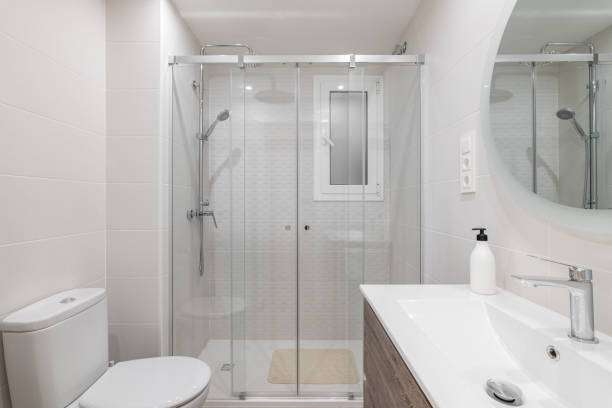
The Psychological Pitfalls Behind Size: Why People Always Choose Wrong
Choosing the wrong size frequently isn’t entirely a matter of insufficient information; it’s also related to consumers’ psychological expectations. Many people subconsciously view bathroom mats as “movable carpets,” believing that a larger coverage area equates to greater safety, while ignoring the dynamic behavior of people in the bathroom.
Furthermore, e-commerce pages often use visual presentation to downplay the perceived size, leading consumers to make judgments without actual spatial reference. Only when actually using the product do they discover a significant discrepancy between the size and the space, but due to the hassle of returns and exchanges, they choose to make do, thus perpetuating the risk over time.
From this perspective, choosing the right bath mat size is not just a product issue, but also a reflection of the maturity of home safety awareness. Only when people begin to realize that “suitability” is more important than “appearing more” will they truly take the first step towards shifting from decorative consumption to functional safety features.
Conclusion: Size is not a detail, but an integral part of a safe structure.
It may seem like just a small item in the bathroom, but the safety responsibility it carries is far more important than you might imagine. Choosing the wrong size isn’t just a simple matter of inconvenience; it could amplify risks at critical moments and even directly lead to an accident.
Analysis of different spatial structures reveals that rectangular and square bath mats each have their suitable applications. The key lies in understanding the logic of spatial use and human behavioral patterns. Only when size, shape, and space work in harmony can a bath mat truly fulfill its anti-slip function.
When we re-examine these seemingly insignificant choices, we are actually redefining the standards of home safety. Safety does not come from expensive and complex equipment, but often from a correct understanding and respect for details.
FAQ
Question 1: Is a larger bath mat always safer? Not necessarily. An oversized bath mat, if it doesn’t fit the space, is prone to wrinkles, curling edges, or being squeezed by fixed objects, which actually increases the risk of tripping. The key to safety is continuous coverage of key foot areas, not simply pursuing larger areas.
Question 2: Can only long and narrow bathroom mats be used in small bathrooms?
Not necessarily. The key is the walking path and direction of movement. If the space is long and narrow and the movement is mainly in a straight line, a long and narrow shape is more suitable; if there are many turns and multi-directional movements, a small but stable square bathroom mat may be safer.