Bath mat odor being amplified? 5 reasons reveal increased consumer sensitivity.

From “a slight odor is normal” to “unacceptable,” a shift in perception standards is underway.
For a long time, the issue of odor in bath mats was hardly discussed seriously. Newly purchased bath mats might have a rubbery smell, develop a musty odor after prolonged use, or smell less fresh during the rainy season—these were considered “normal phenomena.” Consumers often chose to tolerate it, air it out, or simply replace it with a new one; very few people expressed strong dissatisfaction.
However, in recent years, a significant change has been taking place. Bath mat odors are being frequently mentioned, with increasingly detailed descriptions of the smell in reviews, a marked decrease in tolerance, and even becoming a major reason for returns and negative reviews. The same smell, which might have been ignored in the past, is now being amplified, repeatedly discussed, and considered an unacceptable problem.
This doesn’t mean that bath mats have suddenly become “smeller,” but rather that consumers’ sensitivity has undergone a structural change. The odor problem has been amplified not because of a single factor, but because of the combined effect of multiple changes in lifestyle, health awareness, consumer psychology, and environmental expectations. Understanding these five reasons is key to seeing the true logic behind the bath mat odor controversy.
Reason 1: The home environment has shifted from a “functional space” to a “space for long-term stay”.
Consumers’ sensitivity to odors depends primarily on the length of time they spend in a space. When the bathroom is merely a functional area used only briefly, the presence of odors is naturally limited. However, as the bathroom gradually becomes a frequently used space in daily life, and even a space with relaxing attributes, the tolerance threshold for odors decreases significantly.
In recent years, people have been spending significantly more time at home, and showering is no longer just about quickly completing a cleaning task, but has been given the meaning of soothing emotions and restoring energy. People spend more time in the bathroom, and their perception of environmental details has become amplified. Odors that were not noticeable during brief contact are continuously amplified in the long-term hot water, steam, and enclosed space.
In this usage scenario, the bath mat is no longer just a non-slip tool underfoot, but an integral part of the bathroom environment. Once an odor is present, it will be directly incorporated into the overall evaluation of the living experience. When consumers begin to measure the bathroom environment using terms like “comfortable,” “clean,” and “relaxing,” any unpleasant odor will be rapidly amplified.
This means that odor issues are no longer just product defects, but a factor that disrupts the user experience. The change in standards is the first root cause of this increased sensitivity.
Reason 2: Increased health awareness leads to associations between smells and risks.
Odors themselves do not necessarily indicate danger, but with increasing health awareness, consumers are finding it difficult to simply dismiss unpleasant smells as “unpleasant to smell.” More and more people are subconsciously associating odors with bacteria, mold, and chemical residues.
This association doesn’t entirely stem from professional knowledge, but rather from a long-term health information environment. Frequent discussions about mold, allergens, and volatile substances have created a conditioned reflex in consumers. The mere smell of an unidentified odor immediately triggers concerns about its potential harm to the body, its impact on the skin, respiratory system, and even long-term health.
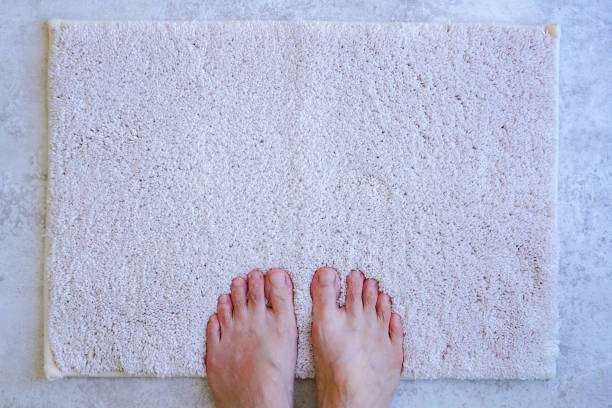
Bath mats occupy a highly sensitive position. They are constantly in a humid environment, in direct contact with the skin, and users often stand barefoot. Under these conditions, any odor will be quickly interpreted as a potential risk signal. Even without explicit discomfort, psychological unease is enough to reduce acceptance of the product.
Therefore, the amplification of bath mat odor is essentially a result of consumers’ premature risk perception. When people begin to examine everyday products from a health perspective, odor is no longer a sensory issue, but a safety issue.
Reason 3: The product is more durable, but the problems are “exposed over a long period of time”.
A seemingly paradoxical yet crucial factor is that the overall improvement in the quality of bath mats has actually made odor problems more noticeable. In the past, bath mats had a short lifespan and were replaced after a period of use, meaning many potential problems were eliminated before they had a chance to accumulate.
Nowadays, consumers tend to buy thicker, more slip-resistant bath mats that are advertised as having long-term durability . These products are often installed for extended periods and are not frequently replaced. Over time, factors such as the material’s absorbency, drainage system, and ventilation conditions can all have a lasting impact on the odor.
As the usage period is extended, odor is no longer an occasional problem, but rather a recurring and gradually worsening issue. Consumers become more sensitive to this persistent smell and are more likely to leave negative reviews.
In other words, odor isn’t necessarily a new problem, but rather one that has been amplified and exposed due to changes in usage patterns. Improved durability raises consumers’ expectations for a consistent experience, so disappointment is amplified when odor cannot be effectively controlled.

Reason 4: Increased information transparency amplifies individual feelings within the collective.
In an environment of high information transparency, consumers’ feelings are no longer isolated. Someone who smells an unpleasant odor in a bath mat might hesitate to consider whether it’s an isolated case; but when they see numerous similar descriptions in the comments section, their previously vague sense of discomfort is quickly confirmed and amplified.
This collective feedback mechanism is an important characteristic of the modern consumer environment. Odor itself is subjective; different people have vastly different sensitivities to the same smell. However, when numerous reviews use similar terms to describe unpleasant odors, consumers tend to believe it’s a universal problem rather than a personal perception.
More importantly, the dissemination of information shapes expectations in advance. When consumers are repeatedly reminded before purchasing that “this bath mat has a scent,” even if the actual smell is not strong, it is more easily noticed and amplified. This psychological suggestion significantly reduces tolerance for odors.
In this environment, odor is no longer just a post-product experience issue, but a risk factor that influences purchasing decisions in advance. Once it becomes a label, it is difficult to ignore.
Reason 5: Improved quality of life makes “reluctantly accepting” no longer reasonable.
The final reason stems from the overall improvement in expectations for quality of life. As consumers become accustomed to better air, cleaner fabrics, and more comfortable living environments, their tolerance for unpleasant odors naturally decreases.
In the past, many people’s requirement for daily necessities was simply “if it works.” But now, more and more consumers want everyday items to be free of any extra burdens, including odors. As an item that is used every day, the significance of bath mats is being re-evaluated.
In this context, the explanation that “it has a slight odor but doesn’t affect usability” is no longer acceptable. Consumers are no longer willing to adjust themselves to adapt to products; instead, they expect products to meet higher standards of living.
This change isn’t limited to the bathroom and mat industry; it permeates the entire home furnishing market. The reason odor issues are being amplified isn’t because consumers have become more demanding, but rather because old standards have become ineffective as lifestyles have improved.
What’s being magnified isn’t the smell, but the difference in standards.
In summary, the amplified issue of bath mat odor does not signify a decline in the overall quality of the product, but rather a shift in consumers’ perception standards and expectations. Increased time spent at home, heightened health awareness, longer usage cycles, greater information transparency, and improved quality of life have all combined to transform odor from a negligible issue into an uncompromising bottom line for the user experience.
When standards change, older designs and materials naturally become outdated. Increased consumer sensitivity is essentially pushing the entire industry to re-examine fundamental issues, rather than generating unreasonable complaints.
Conclusion: Odor controversy is an inevitable stage in a mature market.
Every mature consumer market goes through a transition from simply having a product to assessing its quality. The amplified issue of bath mat odor is a prime example of this shift. When consumers begin to seriously discuss smell, it indicates that they now view bath mats as long-term, household items that deserve to be treated with care.
From this perspective, unpleasant odors are not a problem, but a signal. It reminds the market that consumers are becoming more sensitive, and old, low standards can no longer meet their new expectations for life.
The real question is never “why is everyone suddenly so concerned about the taste,” but rather “are we ready to respond to this concern?”
FAQ
Question 1: Does an odor from a bath mat necessarily mean there is a safety hazard?
Not necessarily. The odor may come from the materials themselves or a damp environment, but with increased health awareness, consumers are more inclined to be cautious, which reflects their heightened sensitivity.
Question 2: Why are tastes that were acceptable before now unbearable?
Because the amount of time spent at home, the frequency of use, and expectations for quality of life have all changed, and consumers have significantly increased their demands for long-term experiences.
Question 3: Will the odor problem of bath mats be alleviated in the future? With the optimization of material selection, structural design and usage habits, the odor problem will be gradually improved, but consumers’ high sensitivity to odors will persist for a long time.