Bath mat hand washing process: 5 key steps to avoid damaging your bath mat with each wash

In many households, the way a bath mat is cleaned often determines its “maximum lifespan.” Many people have had this experience: it was non-slip and soft when they first bought it, but after a period of use, it starts to harden, become sticky, and lose its non-slip effect, sometimes even having to be thrown away before it’s broken. Many people then attribute the problem to poor mat quality, but overlook a more common and fatal reason—improper cleaning methods.
Compared to machine washing, hand washing is considered a gentler and safer way to care for bath mats . However, in reality, improper hand washing methods can also accelerate the aging of bath mats . Excessive scrubbing, choosing the wrong detergent, and improper soaking time can all unknowingly damage the material structure of the bath mat , making the mat , which originally provided anti-slip and support properties , “worse with each wash.” The truly correct way to hand wash a bath mat is not simply to soak and rub it, but rather a logical, orderly, and controlled process.
This article will detail the complete hand-washing process for bath mats , from pre-wash assessment to pressure control during washing, and post-wash treatment details, systematically explaining five key steps that truly determine the lifespan of a bath mat . Understanding these steps is not just about getting the mat clean, but also about ensuring it maintains its proper anti-slip properties and sense of security during long-term use.
Why is it that hand washing a bath mat is more likely to damage it?
Many people choose to hand wash their bath mats out of a protective instinct, believing that avoiding the vigorous agitation of a washing machine will reduce damage. However, the problem is that hand washing often involves more flexibility, with the washing actions entirely dependent on personal habits. Some people scrub repeatedly with a brush to achieve a “cleaner” result; others soak them for extended periods to ensure they are thoroughly clean; still others use strong detergents or disinfectants directly.
bath mats look cleaner in the short term , they cause irreversible damage to the material. The anti-slip performance of bath mats largely depends on the surface microstructure and the elastic structure of the bottom. Once these structures are damaged, even if there is no obvious change in appearance, the safety in actual use will be significantly reduced.
Therefore, the correct hand washing process is not about “the cleaner the better,” but about finding a balance between cleaning and protection.
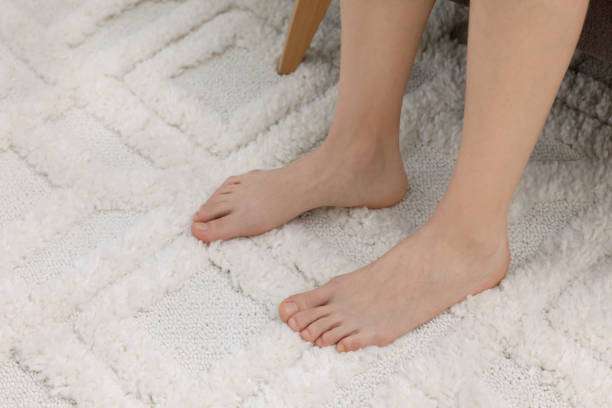
the true condition of the bath mat before cleaning.
Before you begin cleaning, the most easily overlooked yet extremely important step is assessing the condition of your bath mat . Not every cleaning requires the same pressure and method. The cleaning logic is completely different for a mat with only a small amount of water and dust on the surface compared to a mat that already feels sticky, has an odor, or is moldy .
inspecting a bath mat , in addition to checking for dirt, it’s essential to touch and feel it. If the surface feels sticky or slippery, it indicates that sebum and cleaning product residue have formed a film on the material, and simple rinsing won’t solve the problem. If the suction cups or anti-slip texture on the bottom are clogged with dirt, a more targeted cleaning method is needed.
By assessing the level of dirt and adjusting the cleaning strategy accordingly, unnecessary over-cleaning can be avoided. Many bath mats are ruined not because they are dirty, but because excessive cleaning methods were used when intensive cleaning was unnecessary.
Two key steps: Water temperature control determines material lifespan.
Water temperature is arguably one of the easiest aspects to make mistakes in when hand-washing a bath mat. In daily life, many people instinctively choose to wash their mats with hot water, firmly believing that it will remove stains more easily and ensure better hygiene. However, they may not realize that for most bath mat materials, excessively high water temperatures are actually a long-term and insidious form of chronic damage.
Take common materials like rubber, TPE (thermoplastic elastomer), PVC (polyvinyl chloride), and composite materials as examples. When exposed to high temperatures, they all soften or undergo structural changes to varying degrees. While the problems may not be immediately apparent, after repeated high-temperature washing, the original elasticity of these materials will noticeably decrease, and even the anti-slip textures will be more prone to collapsing. This is especially true for the crucial anti-slip structure on the bottom of a bath mat; once it loses its original elasticity due to high-temperature washing, restoring its original excellent grip and traction becomes extremely difficult.
Therefore, to give your bath mat an ideal hand wash, the water temperature should ideally be close to room temperature or slightly warm. This creates a conducive environment for the cleaning agent to work effectively, rather than relying solely on temperature to forcibly break down dirt. This seemingly gentle approach actually helps maintain the mat’s excellent anti-slip properties for a longer period, allowing it to serve us better and for longer.
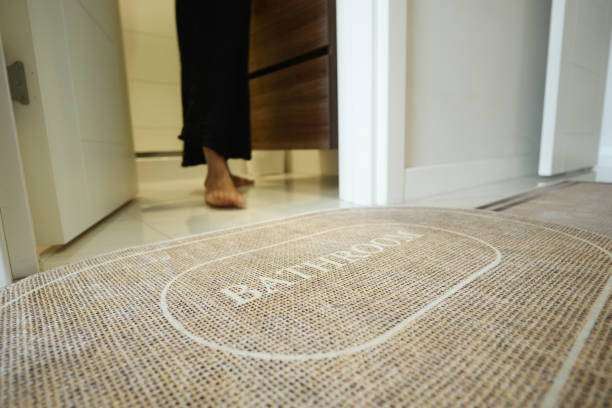
Three key steps: Choosing the right cleaning agent is more important than applying force.
When hand-washing a bath mat , the real factor determining the cleaning effect is not how hard you scrub, but whether the detergent is suitable. Many families directly use strong alkaline laundry detergent, degreaser, or even disinfectant. These products may be effective for clothes or floors, but they are extremely unfriendly to mats .
Strong alkaline or oxidizing cleaners can damage the molecular structure of a bath mat ‘s surface, turning it from a surface with friction into a smooth one. This damage is irreversible; even if the bath mat appears very clean, its actual anti-slip properties have decreased. Worse still, cleaner residue may react with water and sebum during subsequent use, forming a new slippery layer.
In contrast, mild, easy-to-rinse neutral detergents are more suitable for hand washing bath mats . They break down sebum and soap scum without causing significant damage to the material. The goal of cleaning is to remove dirt, not to “kill everything.”
Four key steps: Correct control of cleaning movements and pressure
hand-washing mats , many people instinctively scrub vigorously, especially when they see localized stains, and tend to repeatedly rub the same spot. This practice poses a risk to both fabric and rubber mats .
a mat often features a fine texture created through molding or composite processes. These textures are a key source of its anti-slip properties. Excessive rubbing or brushing will gradually wear down these microstructures. In particular, using a stiff-bristled brush may result in a “very clean” mat in the short term, but in the long run, it will make the mat increasingly slippery.
A more reasonable approach is to allow the dirt to loosen naturally through the action of water and detergent, rather than relying on mechanical friction. Gentle pressing and washing along the grain of the material achieves the desired cleaning while minimizing damage. This “slower” cleaning method is actually more professional.
Five key steps: Post-cleaning treatment determines the final result
Many problems with mattresses don’t appear during washing, but rather afterward. The way a mattress is treated after washing directly affects whether it will develop odors, deform, or lose its anti-slip properties.
First, is the rinsing thorough? Cleaning residue is a major cause of slippery mats and unpleasant odors. If not rinsed properly, the residue will be activated by water during the next use, creating a slippery feel. Second, is the wringing method appropriate? While wringing the mat dry may seem effective, it damages the internal structure, especially rubber and TPE materials, making them more prone to losing elasticity.
The drying environment is equally important. Leaving a bath mat in a poorly ventilated bathroom for an extended period creates ideal conditions for bacteria and mold to multiply. Ideally, the mat should be air-dried naturally in a well-ventilated location, away from direct sunlight, to allow internal moisture to evaporate as quickly as possible.
Why proper hand washing can significantly extend the life of your mattress ?
When the hand-washing process is strictly followed correctly, the actual user experience of the mat often changes significantly. Specifically, its anti-slip properties are maintained for a longer period and do not decline rapidly over time as they used to.
The change in feel underfoot becomes more gradual, consistently providing a comfortable walking experience; and the frequency of odors is significantly reduced, making the air environment around the mat fresher and more pleasant. This isn’t because the number of washes is reduced, but because each wash actually “lightens the load” on the mat’s material. Proper hand washing effectively removes dirt and impurities accumulated on the surface and inside the mat, allowing the material to maintain its good condition.
Mats are not disposable items; by design, they are intended to be washable multiple times. This means that with proper use and maintenance, a mat can continue to function effectively for a considerable period. However, this expectation of multiple washes is based on correct use and maintenance. Using incorrect hand-washing methods is like unknowingly diminishing the mat’s performance with each wash. Initially, this performance reduction may not be noticeable, but over time, after multiple improper washes, one day you’ll suddenly find that the mat’s anti-slip properties have significantly decreased, the feel underfoot has become poor, and it may even pose safety hazards, rendering it unsafe to use.
Summarize
a bath mat lies not just in its cleanliness, but in preserving its original functions while cleaning. Anti-slip, safety, and stability are the core reasons for a bath mat’s existence. If the washing method itself undermines these values, then even frequent washing only accelerates its obsolescence.
The next time you’re ready to hand wash your bath mat , take your time and reconsider your water temperature, detergent, pressure, and drying method. The correct process, though seemingly tedious, will ensure your mat remains reliable over the long term. Truly professional cleaning is never about force, but about understanding.